
Everyday decisions and overthinking can make daily life feel heavier than it looks from the outside.
I used to stand in front of the fridge for ten minutes deciding what to have for lunch. Not because there was nothing to eat. Because there were too many options and I kept second guessing every single one of them. By the time I finally chose something, I was already tired in a way that had nothing to do with hunger.
If that sounds familiar, you are not imagining it.
Everyday decisions rarely feel important on their own. What to buy, what to cook, what to answer now and what can wait. Still, by the end of the day, many women feel mentally drained without being able to point to a single demanding event.
Overthinking does not usually come from indecision alone. It grows from the pressure to make every choice feel right, efficient, or justified. When this becomes a daily pattern, even simple decisions start to feel heavier than they should.
Why small decisions consume so much energy
Small decisions are repetitive, constant and often underestimated. They rarely receive closure or recognition, yet they require attention every time they appear. Over time, this creates a steady mental load that accumulates quietly throughout the day.
I notice this most on the days when I have trained in the morning, answered messages, planned meals, sorted my daughter’s schedule and tried to keep up with work. By early afternoon, even choosing which task to do next feels harder than it should. Nothing dramatic happened. But the mental bandwidth was already gone.
The problem is not the number of decisions, but the amount of mental space they occupy when each one is treated as something that needs careful evaluation.
Research on decision fatigue, including work referenced by the American Psychological Association, consistently shows that the quality of our choices decreases as the day goes on, simply because the brain treats each decision as a small expenditure of energy, whether the stakes are high or not.
The habit of turning simple choices into mental debates
Many women develop the habit of analysing everyday decisions as if they carried long term consequences. What starts as being responsible slowly turns into second guessing, comparison and unnecessary doubt.
I have done this more times than I can count. Spending twenty minutes reading reviews for a supplement I had already decided to try. Rewriting a short message four times before sending it. Reconsidering a workout plan that was already working, just because I saw something different online. None of it moved anything forward. It just kept me busy in a way that felt productive but was not.
When everything needs to be optimised, nothing feels settled. This constant internal debate is one of the main reasons decision making becomes exhausting rather than practical.
When overthinking becomes a form of delay
Overthinking often looks productive, but it frequently functions as a subtle form of avoidance. Thinking replaces doing. The decision feels active, but no real movement happens.
This is especially common with everyday tasks that do not have a clear emotional reward. The longer the decision stays unresolved, the heavier it feels. And at some point, the original decision is no longer the only thing on the table. Now there is also the discomfort of having delayed it, which adds another layer of mental weight.
I started paying attention to this when I realised I was spending more time planning some things than actually doing them. The planning felt safe. It gave the illusion of progress without the risk of making the wrong call.
Reducing decision fatigue without changing your whole life
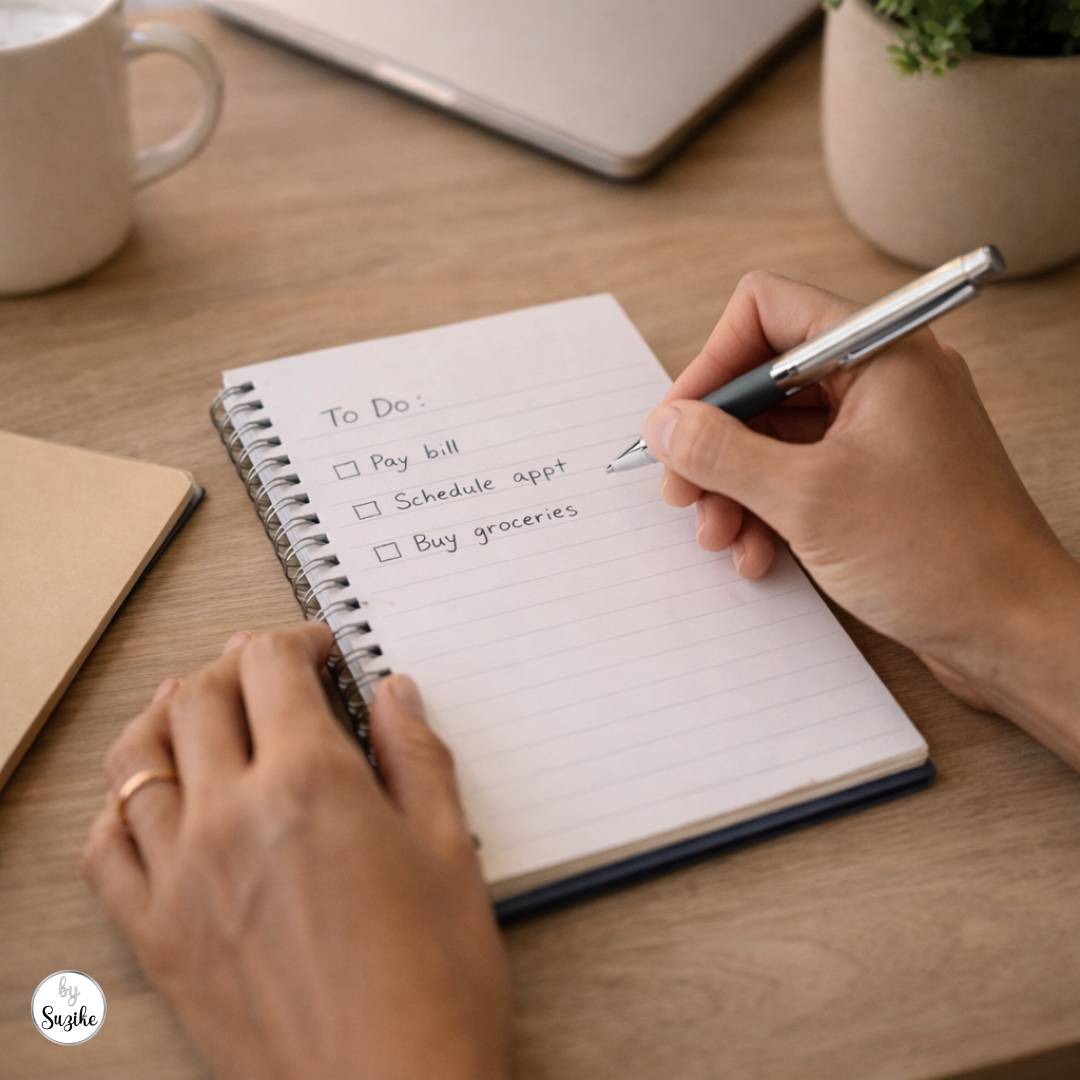
Reducing overthinking does not require radical changes. It starts with accepting that many daily decisions do not need optimisation.
Repeating choices, limiting options, and accepting “good enough” can dramatically reduce mental fatigue. These are not shortcuts. They are ways of protecting mental energy for decisions that truly matter.
For me, this looked like eating very similar breakfasts most days. Choosing my workout the night before instead of in the morning. Having a short list of go-to meals for the week so I am not deciding from scratch every evening. None of these things are exciting. But they freed up mental space for the things that actually needed my full attention.
Making peace with imperfect decisions
No decision guarantees a perfect outcome. Everyday life moves forward through choices that are adequate, not flawless.
Learning to decide without revisiting the same choice repeatedly is not about lowering standards. It is about recognising where energy is better spent.
Some of the best decisions I have made were quick ones. Some of the ones I agonised over the longest turned out to make very little difference either way. That taught me something important: the weight I was giving to a decision rarely matched its actual impact on my life.
Letting go of the idea that there is always a perfect answer is one of the most freeing things you can do for your own mental clarity.
Final Thoughts
Overthinking everyday decisions is not a personal flaw. It is often the result of living in constant evaluation mode. Recognising which choices deserve attention and which do not is one of the most practical ways to protect mental energy.
I am still working on this. There are days when I catch myself spiralling over something completely minor, and I have to actively choose to just decide and move on. It does not always feel natural. But it gets easier the more you practise treating small decisions as exactly what they are: small.
Life becomes lighter when decisions are allowed to be simple.



Leave A Comment