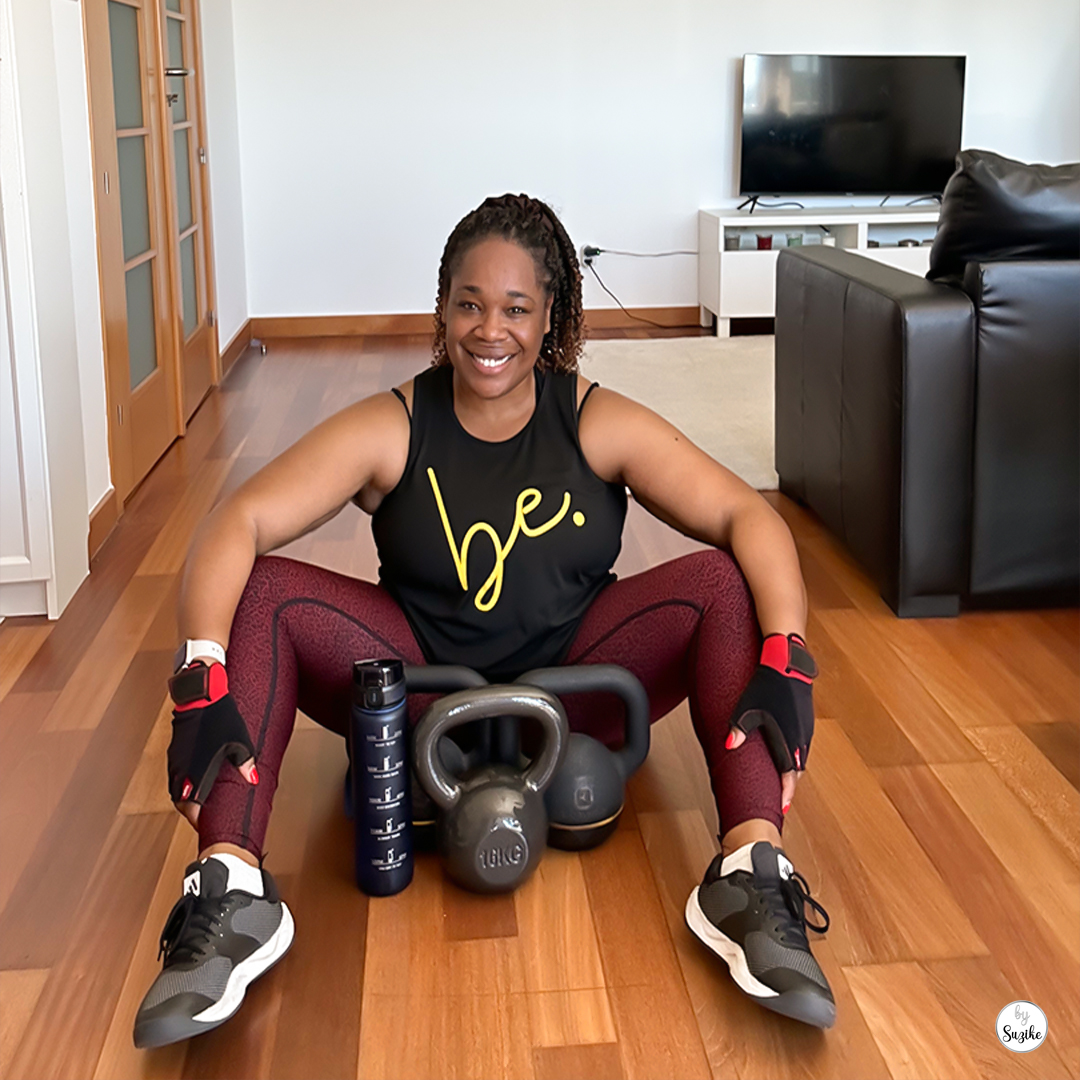
If you’re stuck between a 12 kg or 16 kg kettlebell, you’re already asking the right question. The best first kettlebell is the one you can use safely with clean form, especially for swings, hinges, squats, presses, and rows, while still feeling “heavy enough” to drive results. This guide gives you a fast decision checklist, real-world cues, and simple ways to grow from your first kettlebell without buying a full set.
If you’re looking for real-life kettlebell routines designed for women with limited time, you can also check my Quick Kettlebell Workout for Busy Moms, where I share a simple circuit I actually use at home.
Affiliate note: As an Amazon Associate I earn from qualifying purchases. Some links in this post may be affiliate links, at no extra cost to you.
Quick answer
The 60-second checklist
Choose 12 kg if most of these are true:
- You’re new to kettlebells or you’ve been inconsistent with strength training
- Your hinge pattern is still shaky, or your lower back tends to feel it first
- Pressing overhead feels challenging even with lighter dumbbells
- You want higher-rep conditioning and technique practice at home
- You’re prioritising safety and consistency over ego
Choose 16 kg if most of these are true:
- You already train strength consistently and have good hinge mechanics
- You can deadlift and row comfortably with decent loads
- You can swing a 12 kg for 15 to 20 reps with full control and no back strain
- Your goal is strength and body recomposition with fewer reps
- You prefer fewer, heavier sets over longer workouts
When 12 kg is the smarter first kettlebell
- You’ll learn swings and hinges faster with lower risk
- You’ll build volume with goblet squats, deadlifts, rows and carries
- You can still progress by slowing tempo, adding pauses, increasing rounds, and tightening rest
- It’s easier to use across more exercises, especially presses and Turkish get-ups
If you’re starting from scratch or coming back after a long break, this beginner-friendly routine shows exactly how to use a lighter kettlebell safely at home.
When 16 kg is the smarter first kettlebell
- Swings, deadlifts, rows, and carries will feel “worth it” sooner
- You’ll outgrow 12 kg quickly if you already have a strength base
- It supports lower-rep strength work without needing multiple kettlebells
- It’s usually the better choice if fat loss is paired with strength goals and you recover well
What most beginners get wrong
Fixed vs Adjustable Kettlebell
If you only want one kettlebell and you already know the weight you need, a fixed kettlebell is usually the simplest option. It feels stable, it’s easy to grab, and there’s nothing to adjust before training.
An adjustable kettlebell can make sense if you’re short on space or if you want to progress gradually without buying several weights. The only thing I’d check carefully is the handle shape, the locking system, and whether it feels comfortable for swings.
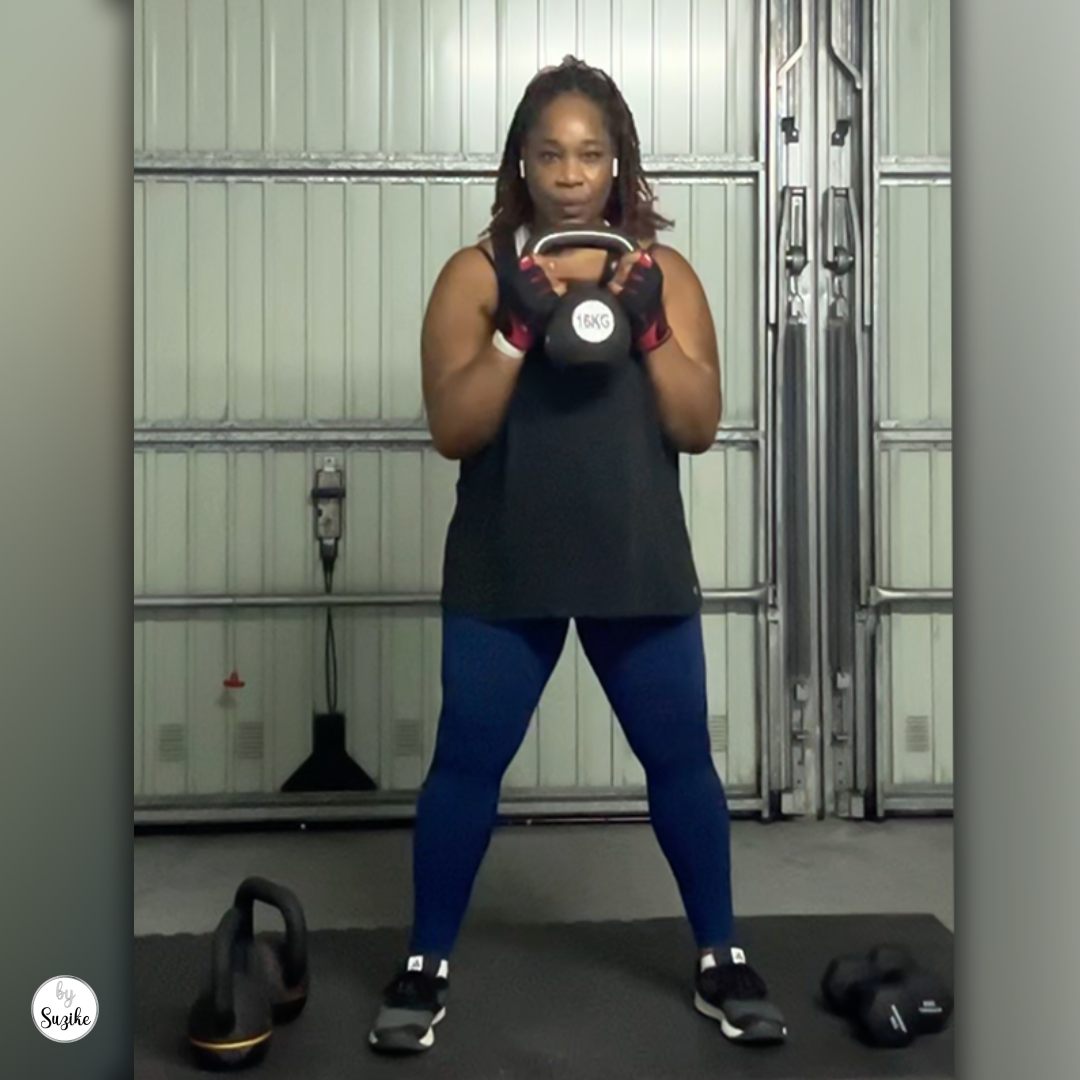
For a first home setup, I’d keep it simple: choose a 12 kg kettlebell if you want technique, confidence and versatility, or a 16 kg kettlebell if you already have a strength base and want something that will last longer.
Best first exercises for each weight
For 12 kg:
- Deadlift
- Goblet squat
- Two-handed swing
- Bent-over row
- Suitcase carry
- Half-kneeling press if your shoulder control is good
For 16 kg:
- Two-handed swing
- Deadlift
- Goblet squat with slower tempo
- Row
- Suitcase carry and farmer carry
- Clean practice only if your form is solid
How to progress with only one kettlebell
- Week 1 to 2: focus on technique, 3 rounds, moderate reps
- Week 3 to 4: add one extra round or shorten rest
- Then: add tempo (3 seconds down), add pauses at the bottom, add carries, add density (same work in less time)
- When you can do swings clean for 10 sets of 10 with stable form, you’ve earned the next weight
I also share my own kettlebell progression inside my Kettlebell Workout at Home.
Gear that makes kettlebell training safer
- Non-slip mat
- Chalk or grip support
- Flat training shoes or barefoot shoes
- Timer
- Light resistance band for warm-up
- Foam roller or mobility ball if you use it consistently
FAQ
Is 12 kg enough to lose weight for women over 40?
Yes. Weight loss depends more on consistency and muscle engagement than on using the heaviest kettlebell possible. For many women over 40, a 12 kg kettlebell is enough to build strength, burn calories, and protect joints while learning proper technique. When combined with regular workouts and simple nutrition habits, it can be extremely effective for fat loss without overwhelming the body.
How do I know if 16 kg is too heavy for me?
If your swing feels uncontrolled, your lower back takes over, or you can’t complete 10 clean reps without losing form, the kettlebell is too heavy for now. A good rule is this: you should feel challenged but still confident and stable. If fear or pain appears, that weight is not serving your progress yet.
Should I buy an adjustable kettlebell instead?
An adjustable kettlebell can be a good option if you want flexibility and have limited space. However, many women prefer starting with one fixed kettlebell because it feels more stable and easier to control. If you’re unsure, a single 12 kg or 16 kg kettlebell is often the simplest and safest first choice.