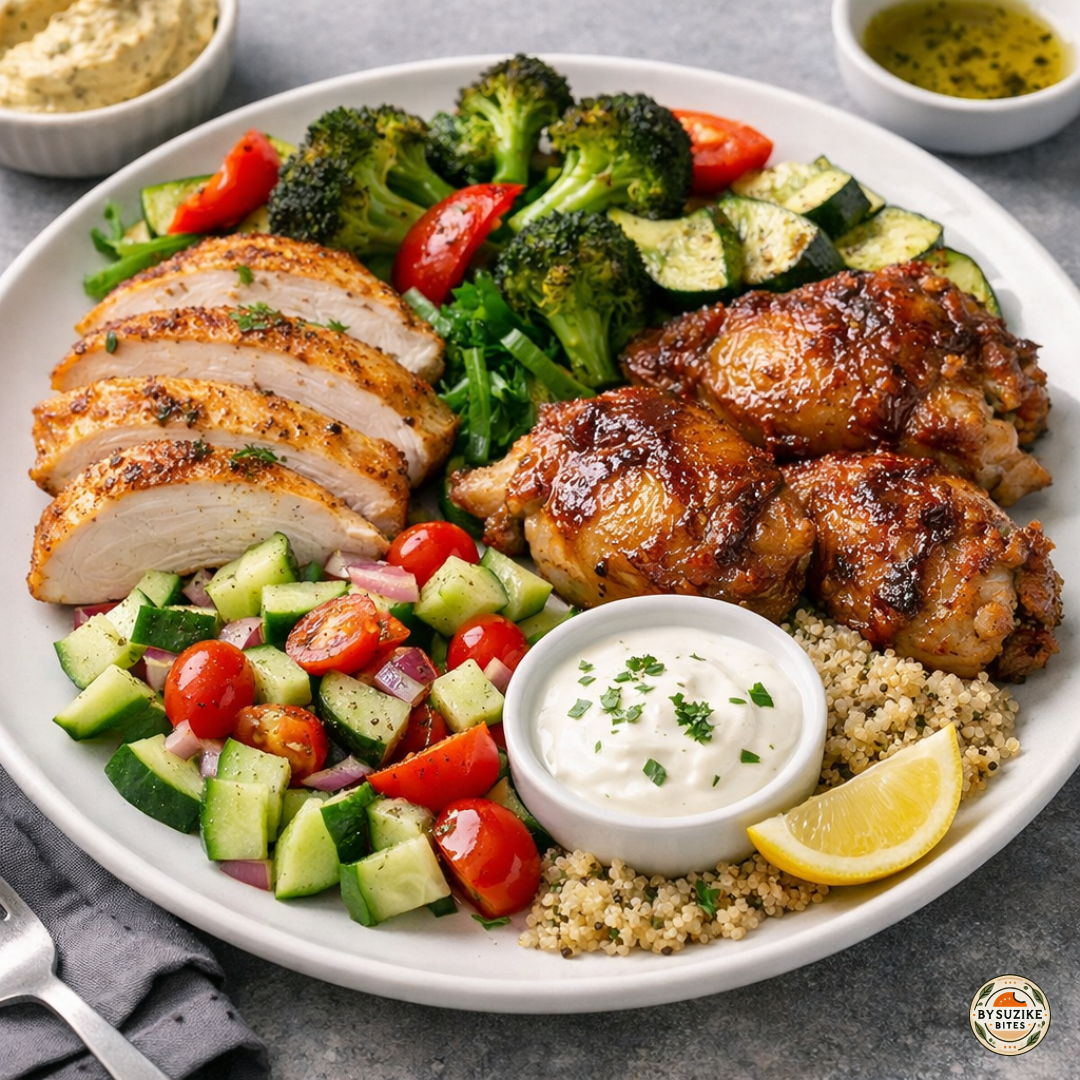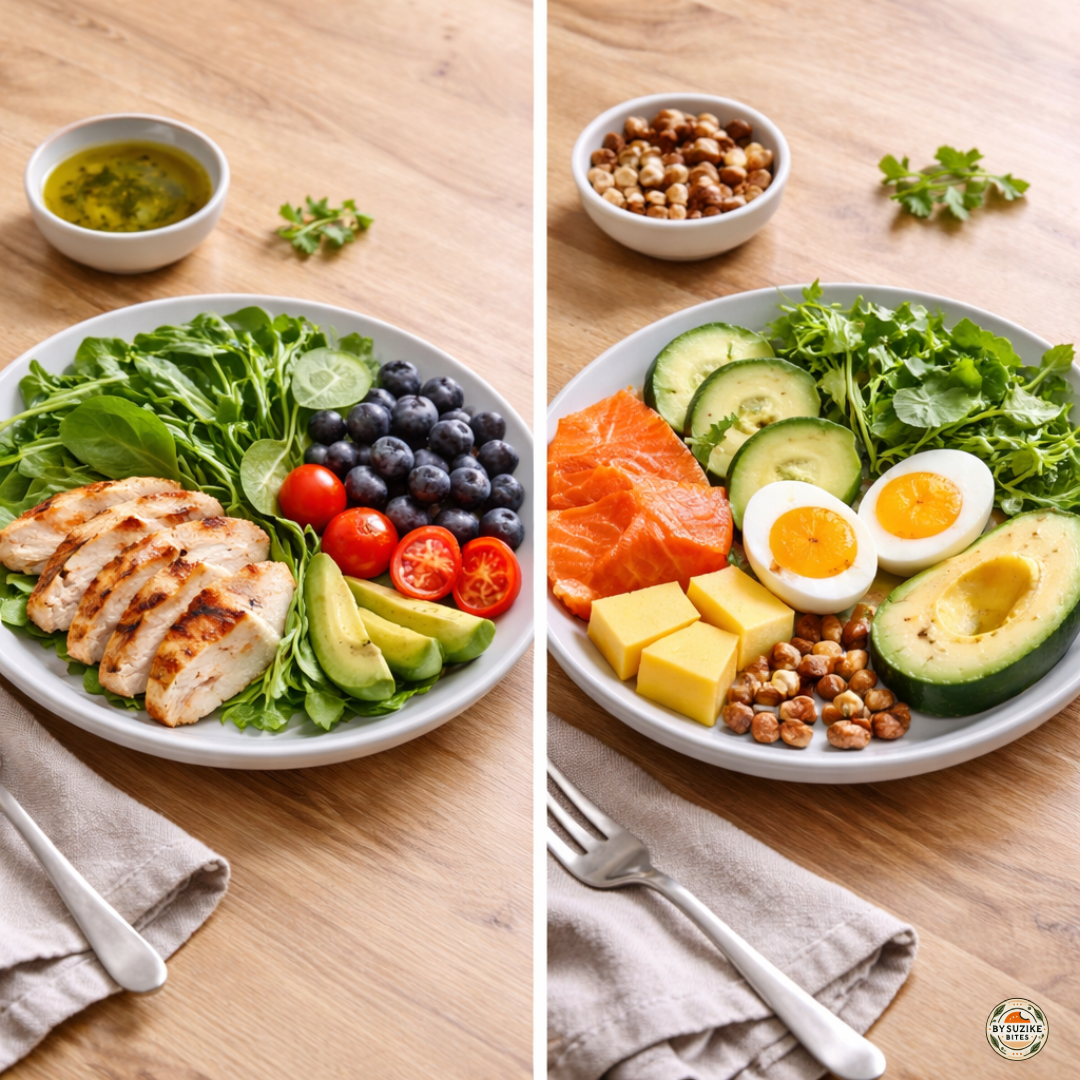
Spoiler: They’re not the same. One is far more flexible than the other.
Let’s clear something up: “low carb” and “keto” are often used as if they mean the same thing. They don’t. And if you’re trying to eat better, feel better, or lose weight, it helps to understand the difference.
Quick note: I’m not a medical professional. If you have diabetes, take medication, are pregnant, or have a medical condition, check with your doctor before changing your diet.
This post is for anyone who feels confused, overwhelmed by strict rules, or simply wants a sustainable way to eat without obsessing over grams and macros.
Here’s how I break it down in real life, without diet culture talk.
What “Low Carb” Really Means
Low carb is flexible. It usually means you reduce the amount of carbohydrates you eat, especially refined carbs, and you build meals around protein, vegetables, and healthy fats.
If you want a practical starting point, read this: Low Carb Protein Foods in 2026: A Smart, Sustainable Way to Eat.
You’re still eating:
• Fruit  (in moderation)
• Veggies 
• Protein 
• Healthy fats 
• Even a slice of bread sometimes, if it fits your life
Low carb does not have one universal number. What matters most is food quality, consistency, and how your body responds. Some days are lower, some days are higher, and that can still work long term.
Low carb is a guideline, not a rulebook.
What the Keto Diet Actually Is
Keto is a strict low carb, high fat approach that aims to push your body into ketosis, where you use fat for fuel.
To get into ketosis, you usually need to stay under 20 to 30g of net carbs per day. That is very low.
That often means:
• No fruit (except berries)
• No grains
• No starchy vegetables
• Much higher fat intake (yes, even butter in coffee)
For some people, keto works well. For others, it can feel mentally heavy and hard to sustain in real life.
So Which One Should You Follow?
Here’s the honest answer:
If you want results and flexibility, low carb is usually more sustainable.
Low carb makes it easier to:
• Eat out without stressing
• Travel without needing a cooler bag
• Keep a normal social life
Keto can bring fast results for some people, but it can also come with keto flu, social stress, and frustration.
Unless you genuinely enjoy strict tracking, low carb tends to be the better fit for most people who want something realistic.
What They Both Have in Common
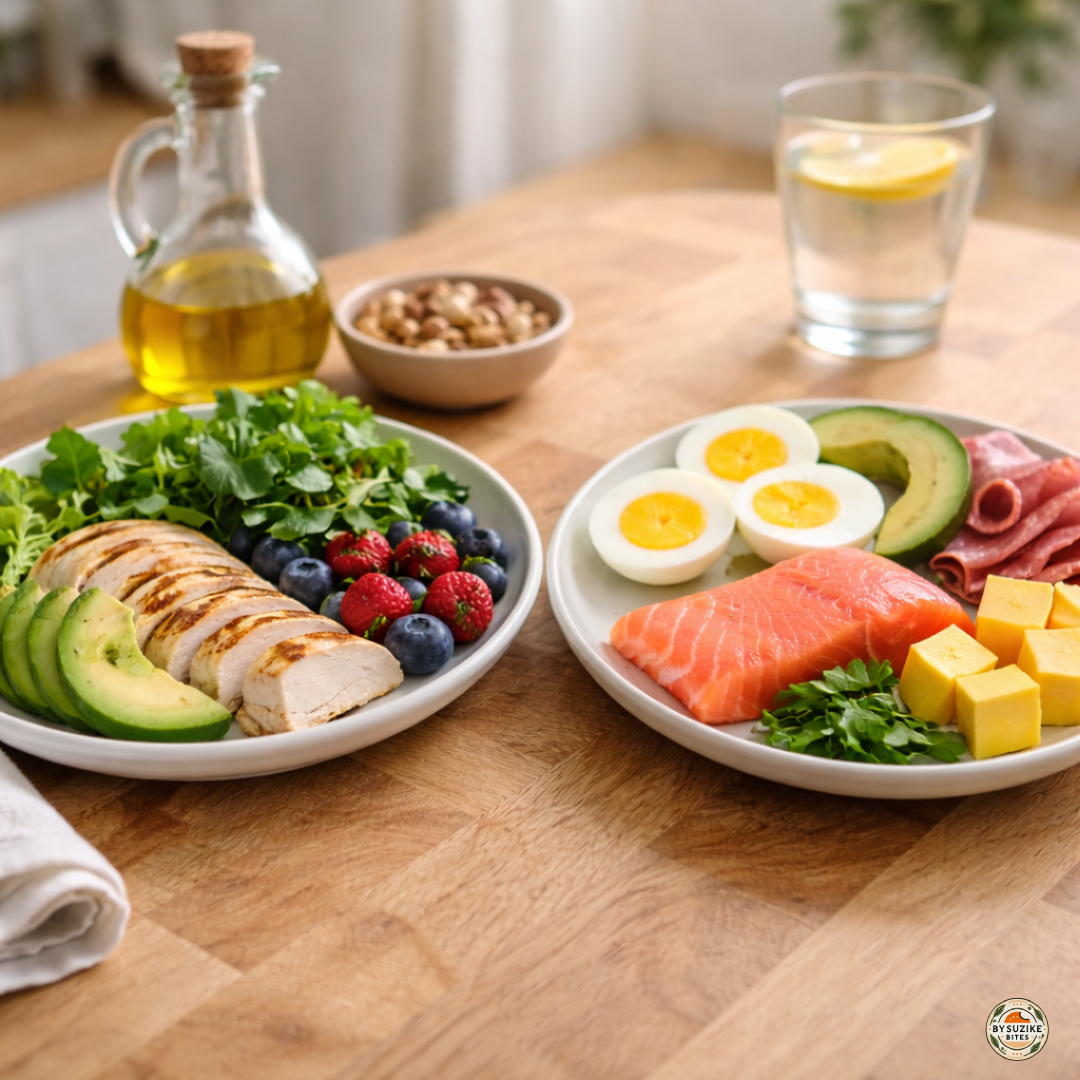
Despite their differences, keto and low carb do agree on a few things:
• Less sugar
• More whole foods
• Protein matters
• Carbs should be chosen wisely
You don’t have to label yourself to eat well. You can simply make smarter choices more often.
If you pay attention to what you eat, it’s worth paying attention to what you drink too.
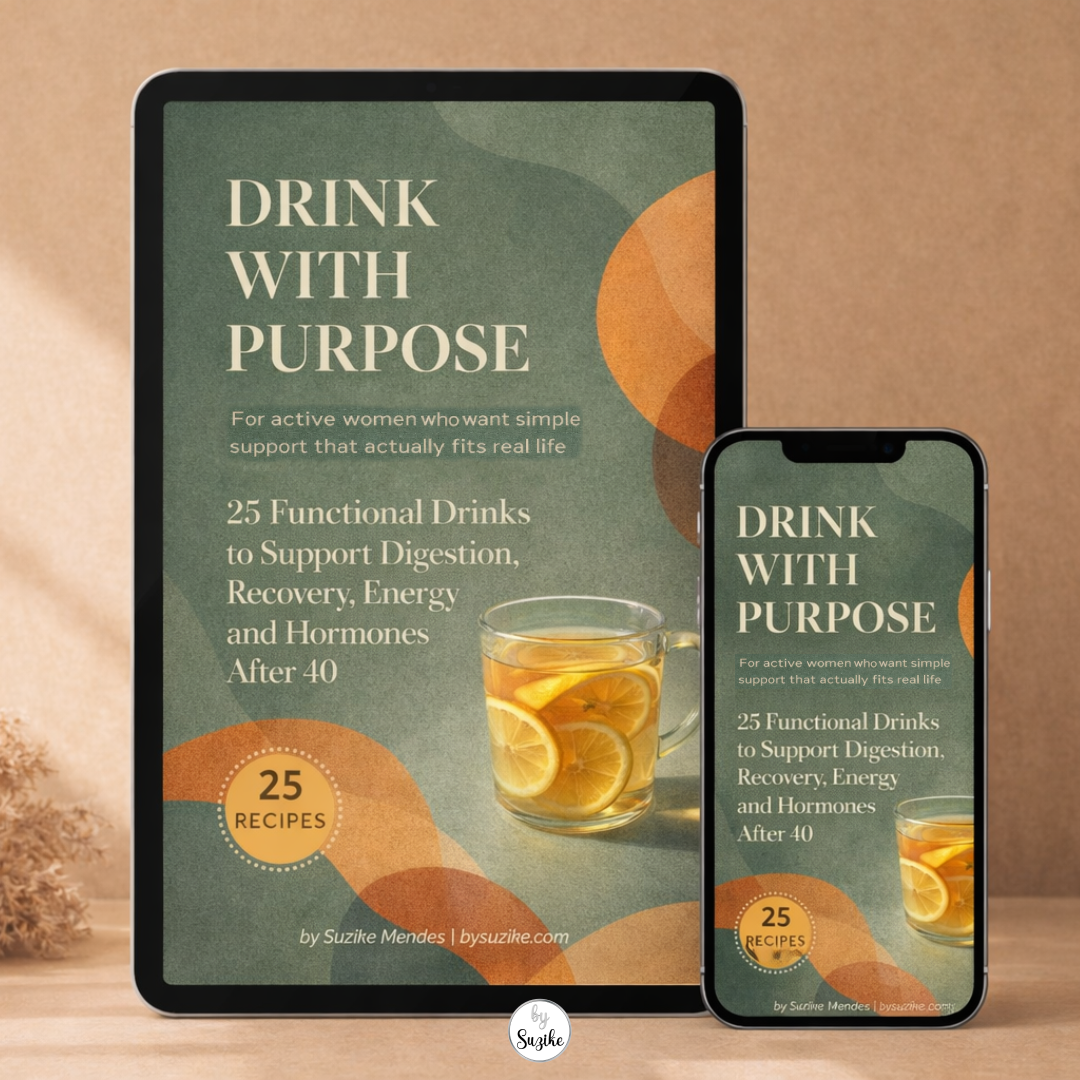
Drink With Purpose is a 25-recipe functional drink guide for women over 40 — low carb friendly, no sugar spikes, organized by goal: digestion, recovery, energy, hormones.
→ Get the guide here: Drink With Purpose
Final Words
If you’re asking “low carb or keto?”, maybe the real question is:
What can I do consistently and feel good about?
If keto works for you, amazing.
If low carb works better for you, welcome.
You don’t need a label. You need a way of eating that helps you feel strong, clear, and in control.
Quick note: I’m not a medical professional. If you have diabetes, take medication, are pregnant, or have a medical condition, check with your doctor before changing your diet.
FAQ: Low Carb vs Keto
Is keto the same as low carb?
No. Keto is a strict version of low carb designed to push your body into ketosis. Low carb is broader and usually more flexible, depending on your goals and lifestyle.
Which one helps you lose weight faster?
Some people lose weight quickly on keto because it is very restrictive. Many people find low carb easier to maintain long term, and consistency is usually what drives sustainable weight loss.
How many carbs is “low carb”?
There is no single universal number. Many people reduce refined carbs and keep portions of higher carb foods intentional. Your needs can vary based on activity level, metabolism, and preferences.
How many carbs is keto?
Most people need to stay very low to reach ketosis, often around 20 to 30g of net carbs per day. That level of restriction is what makes keto feel harder for many people.
Can you eat fruit on low carb?
Yes, usually in moderation. Many people keep berries, and some include other fruits in smaller portions depending on how they feel and what results they want.
Can you eat fruit on keto?
Keto typically limits fruit a lot because it can push you over the daily carb limit. Berries are usually the most common exception.
Is keto safe for everyone?
Not always. If you have diabetes, take medication, are pregnant, or have a medical condition, it’s important to talk to a doctor before making big dietary changes.
Which one is better for real life and social events?
Most people find low carb easier for eating out, traveling, and social situations because it’s less rigid and still effective when done consistently.
Do you have to count carbs on low carb?
Not necessarily. Many people do well by focusing on whole foods, reducing refined carbs, and building meals around protein, vegetables, and healthy fats.
Do you need to count carbs on keto?
Most people do, at least at the start. Keto is strict enough that tracking is often necessary to stay in ketosis.
What if I try keto and hate it?
That’s common. If it feels mentally exhausting or hard to sustain, a moderate low carb approach can give results with much less stress.
What’s the simplest way to start low carb?
Start by reducing sugar, bread, pasta, and ultra processed snacks. Build meals around protein, vegetables, and healthy fats, and adjust from there based on how you feel.