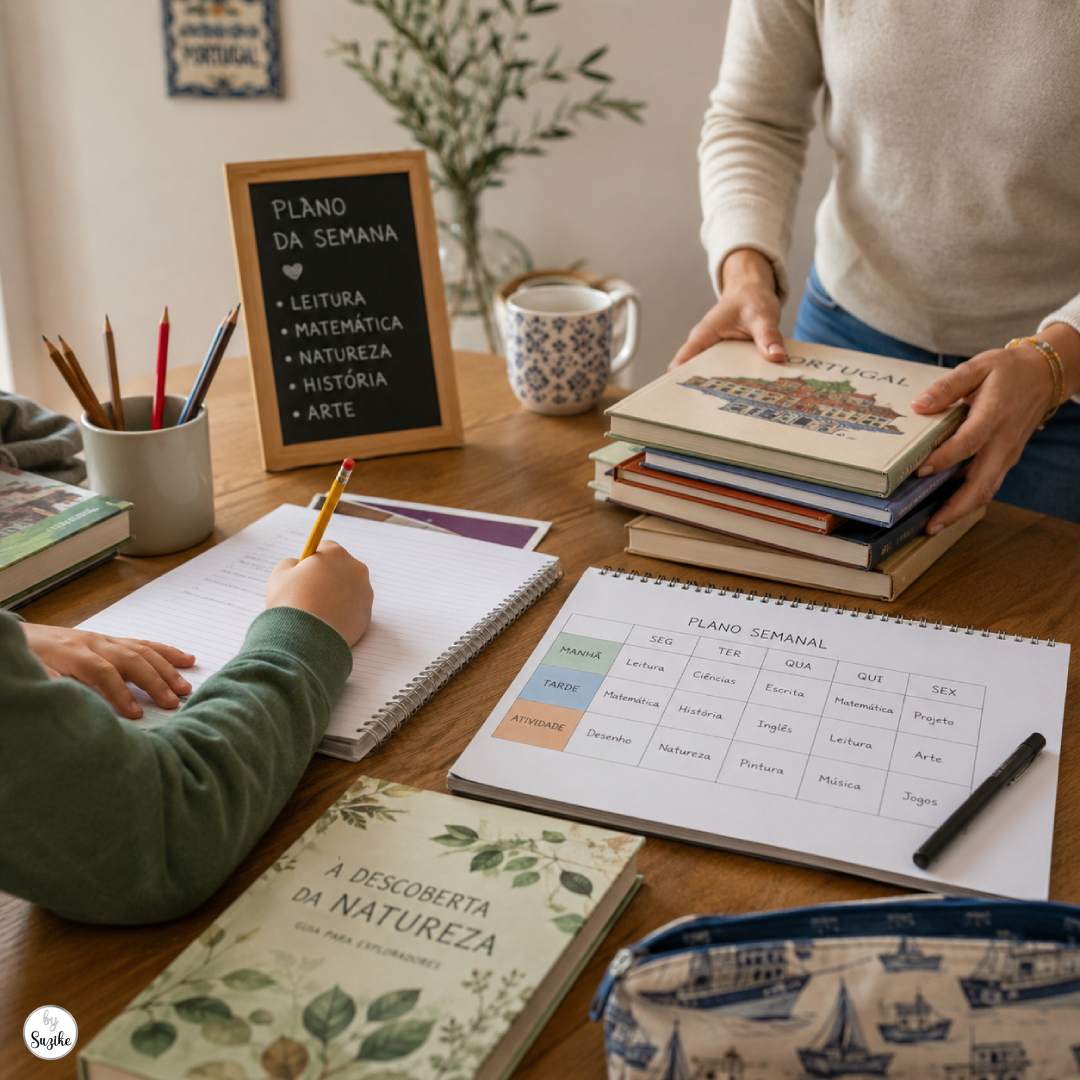
Updated in May 2026: this homeschooling in Portugal guide reflects the current legal framework.
Homeschooling in Portugal: An Overview
Homeschooling in Portugal is legal and regulated. It is connected to the school system, with formal enrolment, supervision, learning expectations and assessment.
This guide gives you a clear overview of what homeschooling means in Portugal, who it is for, how it differs from individual teaching, and how the process works.
Watch: Homeschooling in Portugal Legal FAQ (Video)
If you want a quick, clear overview before reading the full guide, this short video answers the most common questions parents ask about homeschooling in Portugal.
What this video covers:
- Is homeschooling legal in Portugal?
- Who is allowed to homeschool a child in Portugal?
- Which school should my child be enrolled in?
- What documents are required to apply?
- How does the enrollment process work?
- What is the Collaboration Protocol?
- What qualifications does the home educator need?
- What’s the difference between homeschooling and individual teaching?
If you prefer to read instead, start here: Practical Guide to Homeschooling in Portugal.
Homeschooling in Portugal: An Overview
In Portugal, homeschooling is officially known as Ensino Doméstico. It is one of the education options available to families who want their child’s learning process to take place outside the usual school setting.
Homeschooling in Portugal does not mean the child is completely disconnected from the school system. The child must still be enrolled in a school, and that school is responsible for monitoring and certifying the learning process.
Homeschooling gives families more responsibility and more flexibility, but it still operates within the Portuguese education framework.
The current legal framework is based on Decree-Law no. 70/2021, as amended by Decree-Law no. 8/2025. The official DGE page is the most reliable source for current procedures, as these can be updated.
Is Homeschooling Legal in Portugal?
Yes, homeschooling is legal in Portugal.
Portuguese law recognises both ensino doméstico and ensino individual as possible education routes for students covered by compulsory schooling.
Homeschooling must follow the legal process: families submit a formal request through the correct channels, with enrolment and approval. The request is normally submitted by the parent or legal guardian to the director of the school in the child’s area of residence, when that school offers the relevant educational level. If the family chooses a private or cooperative school, the request goes to that school instead.
The school then evaluates the request, including the family’s educational project and the conditions for the child’s learning process.
Homeschooling vs Individual Teaching in Portugal
Portuguese law distinguishes between homeschooling and individual teaching.
Homeschooling, or ensino doméstico, happens in the child’s home and is taught by a family member or by someone who lives with the child.
Individual teaching, or ensino individual, is taught by a qualified teacher to one student outside a school setting.
The requirements are different. In homeschooling, the responsible educator is usually a family member or someone living with the child. In individual teaching, the responsible educator is a qualified teacher.
Choosing home education is not only about where the child learns. It is also about who is responsible for delivering the curriculum and how that responsibility is presented to the school.
Before Hiring a Homeschooling Tutor in Portugal
Hiring support can be helpful, but it does not automatically make the arrangement “individual teaching” under Portuguese law. This guide explains what a tutor can do, what a qualified teacher means in this context and how the two differ.
Who Can Apply for Homeschooling in Portugal?
Homeschooling can be requested for students covered by compulsory schooling who are following general basic education or scientific-humanistic secondary courses.
The request is made by the parent or legal guardian, explaining the reasons for the choice and presenting the required documentation.
One of the key requirements is the responsible educator’s qualifications. In homeschooling, the responsible educator must hold at least a higher education degree equivalent to a Portuguese licenciatura. If the qualification was obtained outside Portugal, its equivalence should be confirmed with the school before applying.
The school may also call the student and the parent or guardian for an interview, to understand the child, the family’s educational project and the proposed learning conditions.
How the School Supervision Works
Even when a child is homeschooled, the school remains part of the process.
The school of enrolment is responsible for monitoring, supporting and certifying the child’s learning. A teacher-tutor is appointed to follow the student’s educational process.
Homeschooling in Portugal is not independent from the school system. The family has more control over the daily learning environment, but the school still has a formal role: portfolio discussions, monitoring moments and assessment requirements are all part of the process.
The Collaboration Protocol
A central part of homeschooling in Portugal is the collaboration protocol: an agreement between the school and the parent or legal guardian that defines how the child’s learning process will be organised.
It covers curriculum management, school monitoring, communication between family and school, portfolio discussion, assessment, and the use of Portuguese as the language of schooling.
The collaboration protocol usually covers one school year and can be renewed or changed by agreement. It is where the family’s educational approach meets the official learning requirements.
Understand the Collaboration Protocol Before You Apply
Before starting homeschooling in Portugal, it is important to understand how the Collaboration Protocol works. This agreement defines how your child’s learning will be organised, monitored and supported by the school throughout the year.
Can You Use Montessori, Waldorf or Other Methods?
Yes. Families may use approaches such as Montessori, Waldorf, Charlotte Mason, project-based learning or others.
The distinction worth keeping in mind is between an education option and a learning method.
Homeschooling is an education option. It describes where and how the child’s formal education is organised.
Montessori, Waldorf and similar approaches are learning methods or educational philosophies. They can shape how the child learns, how activities are planned and how the daily routine is structured.
A family may choose homeschooling and use a Montessori-inspired approach at home. Another family may have a child in school and still use Montessori materials or project-based learning activities after school.
The method can be flexible. The legal responsibilities remain: the child’s learning still needs to be connected to the required curriculum, essential learning outcomes and the monitoring agreed with the school.
What Documents May Be Needed?
The exact documents depend on the school and the child’s situation. Confirming current requirements directly with the school is the most reliable approach.
In general, the process involves a formal request explaining the reasons for choosing homeschooling, information about the responsible educator and evidence of their academic qualifications. The school may also ask for details about the educational project, the learning approach, curriculum organisation and how the child’s progress will be documented.
Keeping copies of all documents throughout the process is useful.
The Student Portfolio
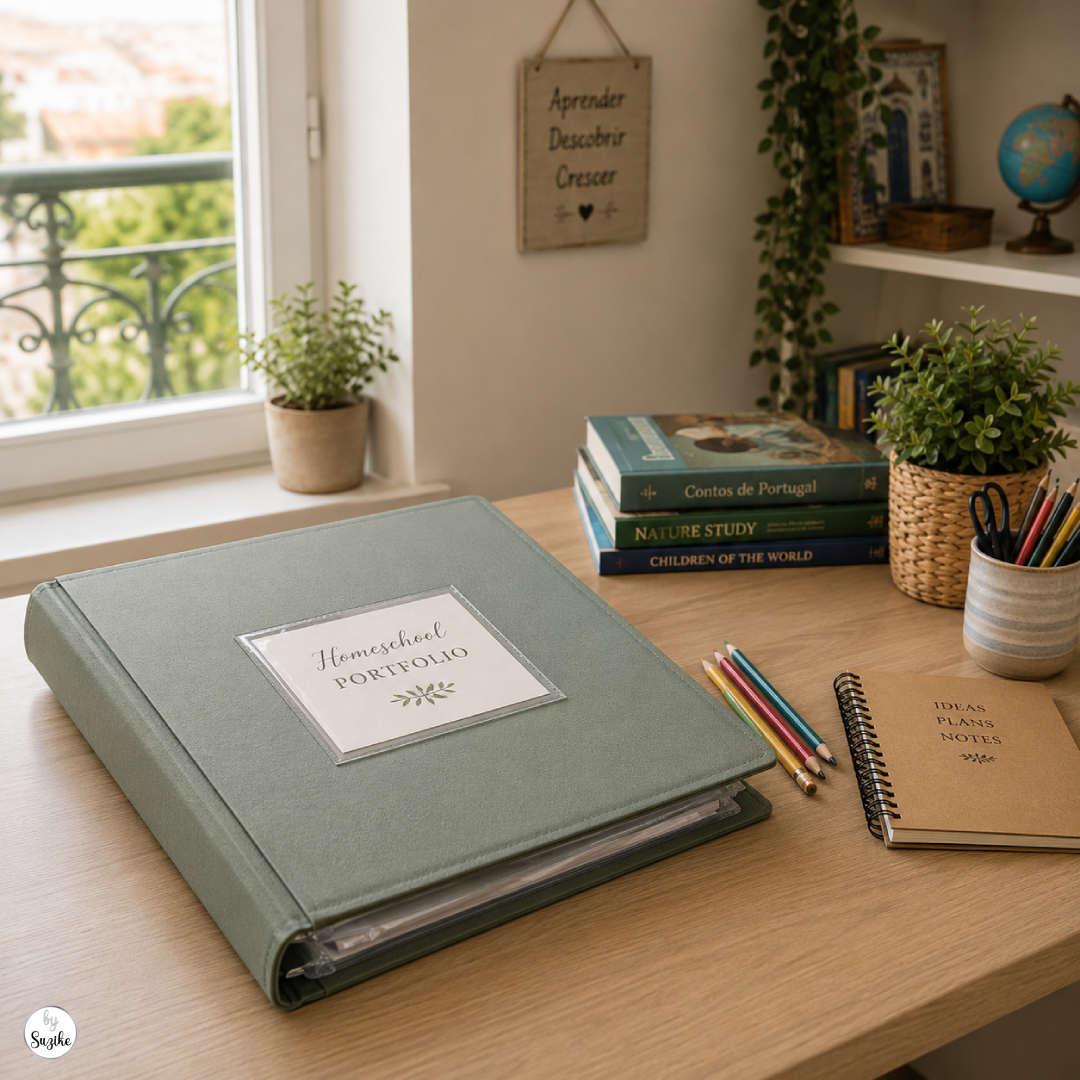
The student portfolio collects evidence of the child’s learning, progress and educational development across the year. It may include written work, projects, reading records, activities, reflections, examples of completed tasks and other relevant materials.
The school uses the portfolio as part of the monitoring process. The teacher-tutor reviews it to understand what the child has been doing and how learning is progressing.
Starting the portfolio early and updating it regularly is far easier than reconstructing a year of learning at the end.
Organize Your Homeschool Portfolio Before the Year Gets Messy
A homeschool portfolio can make school monitoring much easier when it is organized from the beginning. In this guide, I explain what to include, how to structure it and how to keep evidence of your child’s learning throughout the year.
Assessment and Certification
Homeschooled students in Portugal are subject to assessment and certification according to the rules in force.
Families have more flexibility in the daily learning process, but the child remains connected to the wider Portuguese education system.
At the end of each education cycle, students may need to complete assessment procedures for the end of the 1st, 2nd and 3rd cycles of basic education, as well as secondary education. The exact path depends on the child’s year, education level, course and individual situation. Confirming requirements with the school and checking current official guidance gives you the clearest picture.
Homeschooling and Children with Special Educational Needs
The law includes provisions connected to students covered by support measures for learning and inclusion. In some cases, assessment and progression follow specific rules.
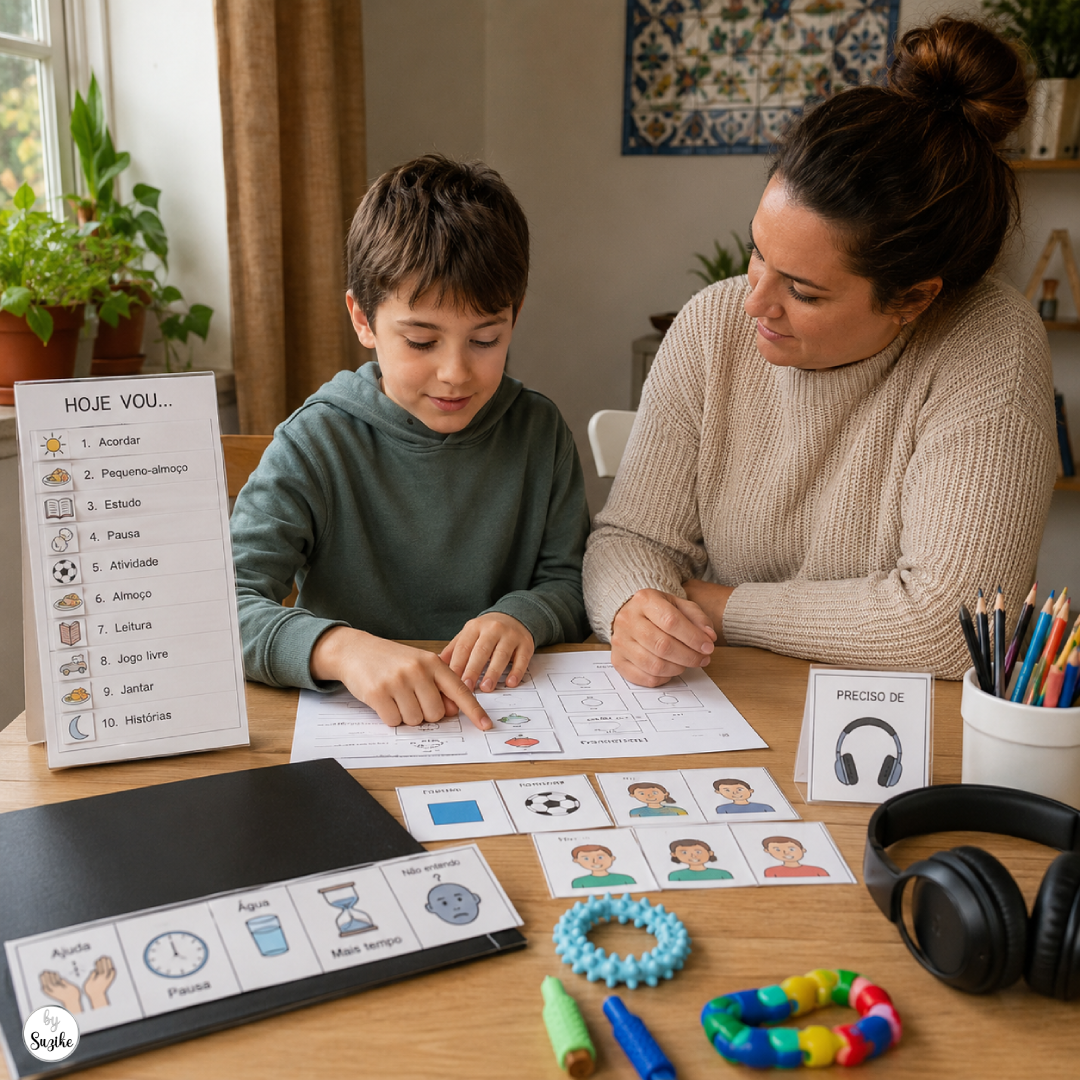
For families in this situation, the conversation with the school is particularly important: what support the child will have access to, what therapies or routines are needed, what adapted learning materials look like at home, and whether the homeschooling arrangement can realistically meet those needs.
For some children, homeschooling offers calm, flexibility and individual rhythm. For others, school-based support is essential. The school can help clarify what the options actually look like for a specific child.
Important update for SEN homeschoolers in Portugal
Families homeschooling a child with special educational needs should understand the recent update on exam exemptions. This guide explains what changed, which documents may matter, and what parents should confirm with the school.
Is Homeschooling in Portugal Easy?
Homeschooling in Portugal requires managing the legal process, communicating with the school, organising learning, keeping records, preparing a portfolio and making sure the child continues to progress.
It works well for families who have time, structure and a clear sense of what is involved. It can become overwhelming when the administrative and educational demands come as a surprise.
Questions families typically think through at this stage:
Do we have time to manage this properly? Does the responsible educator meet the legal requirements? How will we document the child’s learning consistently? How will we handle social interaction, subjects, routines and assessment?
These are practical questions, not reasons to avoid homeschooling. They are just useful to think through before starting.
Homeschooling in Portugal for Expat Families
For expat families, homeschooling can seem like a good solution when children are adjusting to a new country, language or school system.
Living in Portugal means following Portuguese education rules regardless of language spoken at home. Homeschooling remains connected to the Portuguese curriculum, and assessment and certification happen in Portuguese.
For children building their life in Portugal, access to the language, culture and social environment around them is also worth factoring in.
Homeschooling is possible for expat families and works best when planned within the Portuguese education context from the start.
Practical Tips Before Applying
Start with the official DGE information and current legislation. Then contact the school and confirm what documents and steps are required.
Prepare your educational reasons clearly. Schools need to understand why you are requesting homeschooling and how you intend to organise the child’s learning.
Check the responsible educator’s qualifications before starting the process.
Think about your method, but keep it separate from the legal requirements. You can be Montessori-inspired or use another approach, but the child’s learning still needs to meet the required educational expectations.
Start planning the portfolio from the beginning.
Final Thoughts
Homeschooling in Portugal is a legal education option with a clear process: formal enrolment, a collaboration protocol, portfolio work, school monitoring and assessment.
For some families, it offers a meaningful and flexible path. For others, it turns out to be more demanding than expected. Going in with accurate information makes it easier to judge which situation applies.
If you are ready to move forward, the practical step-by-step guide is the next stop.

Leave A Comment