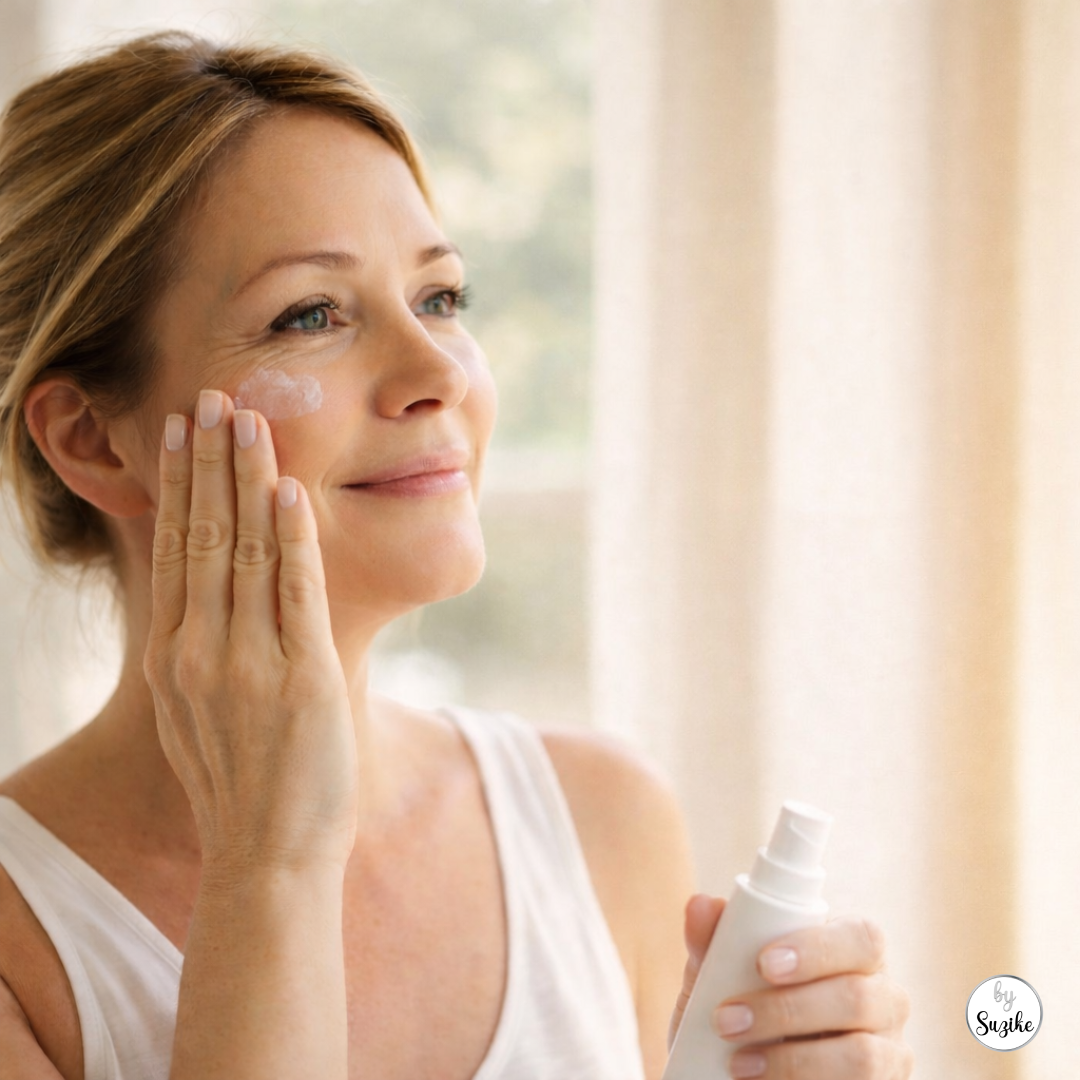
If there is one thing dermatologists agree on, it is this: sun protection for women over 40 is the single most effective anti-aging product you can use. And most of us are still not using it consistently. Let’s fix that.
I used to think sunscreen was just for the beach. SPF 50, white cast all over my face, sticky feeling all day. No thank you.
Then I started paying attention to my skin. Not in a obsessive way, but in a “I want to look good at 46 and not wake up one day wondering what happened” kind of way. And the more I learned, the more I understood that the sun is quietly doing damage every single day, whether you are at the beach or just driving to the supermarket.
So yes, I wear sunscreen now. Every morning. And here is everything I know about why it matters and how to actually do it without hating the process.
Why Sun Protection Matters More After 40
Here is the honest truth. The skin damage you are seeing in your 40s did not happen last summer. It happened over the last 20 or 30 years, a little bit every day. Sun exposure builds up. The effects show up slowly, and then all at once.
After 40, our skin produces less collagen naturally. That means it has less ability to bounce back from damage. UV rays break down collagen even faster, which leads to wrinkles, dark spots, uneven tone, and loss of firmness. These are not just cosmetic concerns. Consistent sun exposure without protection is also the leading cause of skin cancer.
The good news is that it is never too late to start protecting your skin. Studies consistently show that even people who start using sunscreen later in life see real improvement in skin texture and a reduction in new damage. According to the American Academy of Dermatology, daily sunscreen use is one of the most proven ways to prevent premature skin aging.
The Difference Between UVA and UVB (and Why It Matters)
You will see these terms on every sunscreen label, and they are not the same thing.
UVB rays are the ones that burn your skin. They are strongest in summer, between 10am and 2pm. These are the rays most associated with sunburn and surface-level skin damage.
UVA rays are sneakier. They penetrate deeper into the skin, contribute to aging and pigmentation, and they are present all year round, at the same strength, even on cloudy days. UVA rays go through glass. So yes, you can get UVA exposure while sitting next to a window in your home or while driving.
This is why you want a broad-spectrum sunscreen. That means it protects against both UVA and UVB. If it does not say broad-spectrum on the label, put it back.
SPF: What Number Do You Actually Need?
SPF 30 blocks about 97% of UVB rays. SPF 50 blocks about 98%. The difference sounds small but it matters when you have sensitive or damage-prone skin.
For daily use, SPF 30 is the minimum. For extended outdoor time, SPF 50 is a better choice. Anything above SPF 50 offers only marginally more protection and does not justify skipping reapplication.
The most important thing is not the number. It is actually putting it on, every single day, and reapplying every two hours when you are outdoors.
How to Make Sunscreen Part of Your Morning Routine
The reason most people skip sunscreen is that it feels like one more step. But it does not have to be complicated. Here is how I think about it:
Sunscreen is the last step of your skincare routine and the first step before your makeup. Cleanser, toner, moisturizer, sunscreen. Then makeup if you wear it. That is the order.
Apply it to your face, neck, décolleté, and the backs of your hands. These are the areas that age fastest and get the most sun exposure, often without us noticing.
If you find that sunscreen breaks you out or feels too heavy, try a lighter formula. Gel or fluid textures work well for oily or combination skin. Cream textures are better for dry skin. There are also tinted options that work as a light base, which means one less product in your routine.

Do Not Forget These Areas
Most women apply sunscreen to their face and stop there. But sun damage shows up in other places too, and those spots often give away your age before your face does.
Your neck and chest. These areas have thinner skin and show sun damage quickly. If you are applying SPF to your face, bring it down to your chest every single day.
Your hands. Hands are constantly exposed and rarely protected. Age spots on the hands are one of the most common signs of accumulated sun damage. Make it a habit to apply your facial sunscreen to your hands as well, or keep a small SPF in your bag.
Your lips. The lips are often forgotten and they are vulnerable to UV damage too. A lip balm with SPF is a simple addition that makes a real difference over time.
Reapplication: The Step Nobody Does But Everybody Should
Sunscreen does not last all day. After about two hours of sun exposure, the protection starts to break down. If you are spending time outdoors, you need to reapply.
For most people going about their daily routine indoors, the morning application is enough. But if you are walking, exercising outside, running errands, or sitting near a window for extended periods, reapply.
There are spray and powder SPF products that make reapplication easier over makeup. They are not perfect, but they are much better than nothing.
Cloudy Days and Winter: Yes, You Still Need It
This is the one that surprises people most. UV rays do not take days off. Cloud cover blocks some UVB radiation but very little UVA. On a cloudy day you can still accumulate significant UVA exposure, especially if you are outside for extended periods.
In winter, the angle of the sun is lower, so UVB rays are weaker. But UVA remains consistent throughout the year. If you are in the habit of skipping SPF from October to March, you are leaving your skin unprotected for half the year.
The simplest approach is to make it non-negotiable, like brushing your teeth. Every morning, all year. Then you never have to think about whether today counts.
What About Vitamin D?
A common concern is that sunscreen blocks vitamin D production. And technically, it does reduce it somewhat. But here is the reality: most people get enough incidental sun exposure on the parts of their body that are not covered, and most diets can be supplemented if needed.
The skin damage caused by unprotected UV exposure is irreversible. Low vitamin D levels are easily corrected through diet and supplements. The trade-off is clear.
Final Thoughts
Sun protection is not about vanity. It is about taking care of the skin you live in, every day, in a simple and consistent way. The routine does not have to be expensive or complicated. A broad-spectrum SPF 30 applied every morning, reapplied when you are spending time in the sun, and extended to your neck, hands, and lips. That is it.
Your future self will thank you for starting today.
Taking care of your skin during the day is only half the equation. Read how I take care of mine at night: My Nighttime Skincare Routine at 45: Simple Steps That Work
Leave A Comment