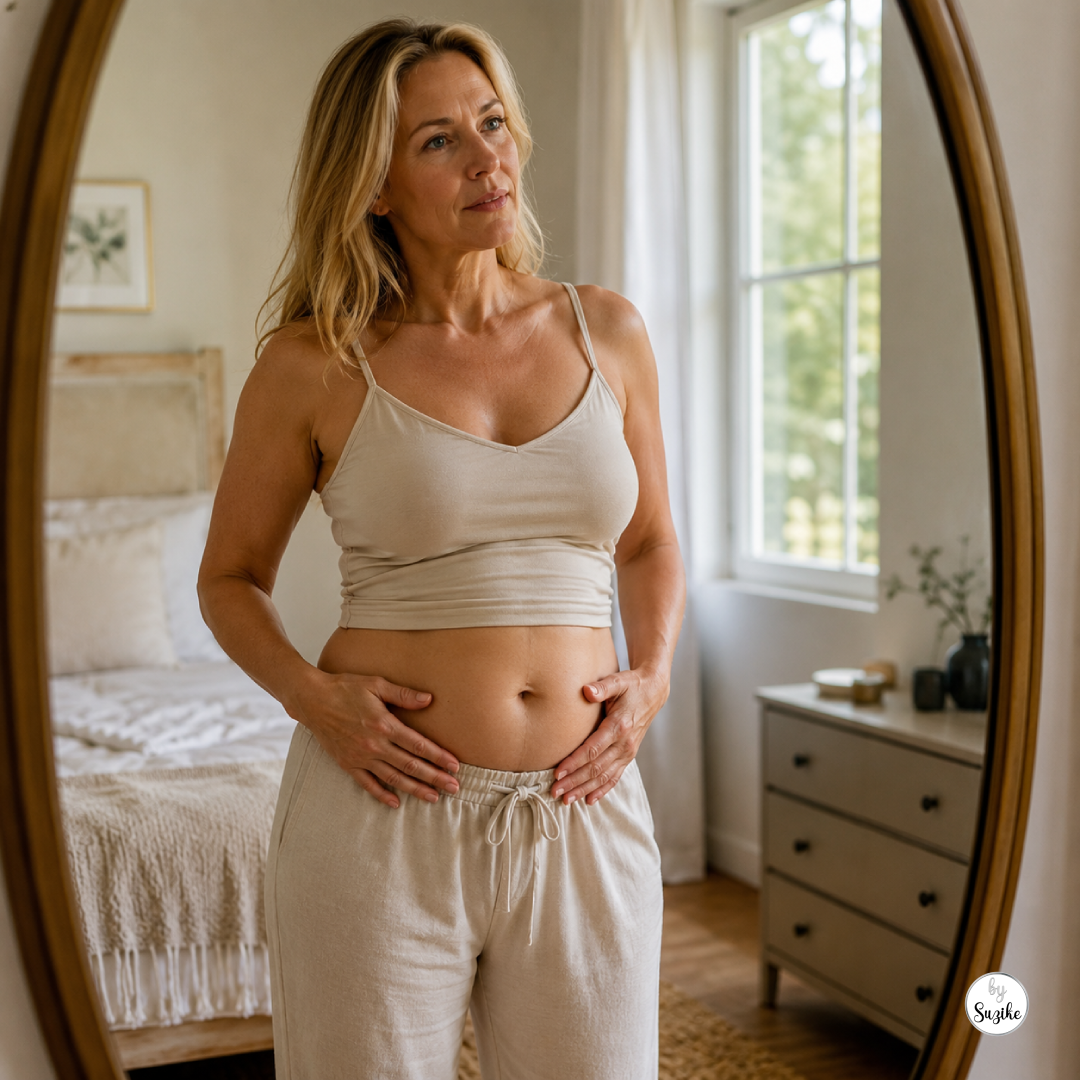
There is a very specific frustration that comes with perimenopause weight gain.
It is the feeling that your body has changed the rules without asking for permission first.
You eat more or less the same. You move. You try. You make an effort. And still, something feels different. The waist. The belly. Clothes that used to sit fine now have opinions. Sleep is lighter. Energy is unreliable. Hunger gets louder. The body that used to respond after two careful weeks now looks at you like: “Cute effort. Anything else?”
Jeez.
And the most annoying part is that many women arrive at this stage thinking they are doing something wrong. As if the body after 40 were supposed to behave exactly like the body at 28, just now with more responsibilities, less sleep, more stress, children, work, house, and a shopping list that somehow never ends.
Very realistic. Love that for us.
The Body After 40 Starts Having Its Own Conversation
One of the strangest parts of midlife is realising that the body starts having its own conversation. One you were not invited to.
For years, you may have known your body in a certain way. You knew what made you feel lighter, what made you bloated, what routines worked. Then, little by little, those answers became less reliable.
The belly became more present. Sleep became more important. Stress started showing up physically. Food affected you differently. Recovery took longer. The body began sending messages in a language you are still learning.
Perimenopause can begin years before menopause, and during this transition estrogen levels become less predictable. Symptoms can include irregular periods, hot flashes, sleep changes, mood changes and weight gain.
That matters because this is not about discipline. The body is changing biologically. Pretending nothing is happening only gives women more reasons to blame themselves.
And honestly, we have blamed ourselves enough.
Read next:
The Belly Becomes A Whole Topic
One of the reasons perimenopause weight gain feels so personal is because it often shows up around the middle.
The belly. That charming area that suddenly decides to become the main character. 🙄
Even when the weight gain is small, the shape feels different. The waist is softer. The stomach more visible. Clothes that used to sit nicely now create a whole emotional situation before 8 a.m. 😅
Mayo Clinic explains that hormonal changes around menopause can make weight more likely to settle around the abdomen, although ageing, lifestyle and genetics also play a role.
This is why so many women say: “I have not changed that much, so why does my body feel so different?”
Because sometimes the change is not the number on the scale. It is the distribution. The texture. The way the body feels inside clothes. The way it reacts to tiredness, stress, food, and one night of bad sleep.
It is very easy to turn this into shame. But I think it is more useful to call it what it is: a body in transition. A very annoying one. But still a transition.
Sleep, Stress And Real Life Matter More Now
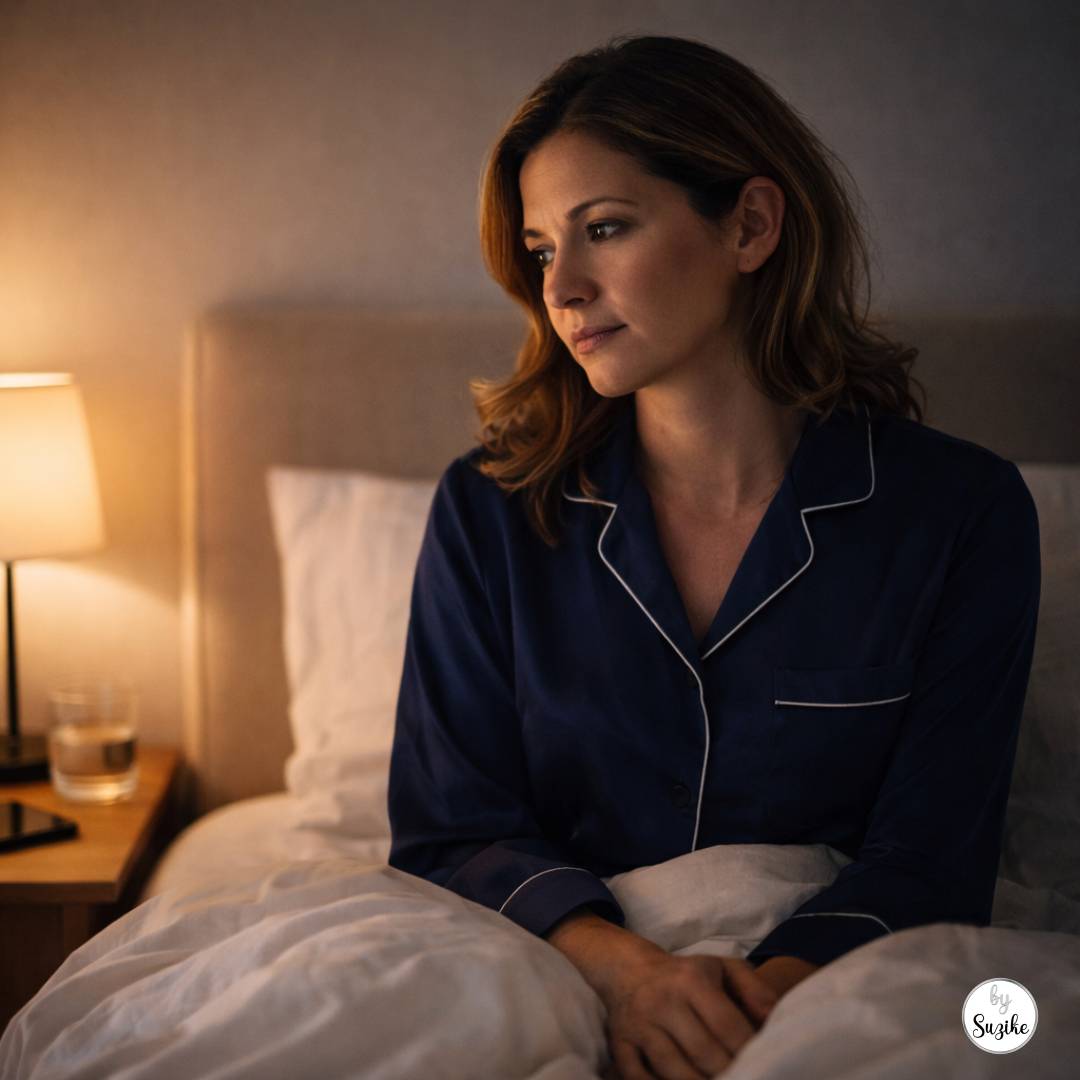
Sleep becomes ridiculous after 40. I used to know it was important, but at this stage it becomes almost dramatic. One bad night and the whole next day feels heavier. Hunger is louder. Patience is shorter. Training feels harder. The body feels slow, puffy and mildly offended.
You can read more about Why Sleep Becomes Harder for Women After 40 and What Is Really Behind It here.
Perimenopause can affect sleep through night sweats, hot flashes, anxiety, restlessness and hormonal changes. The NHS also lists sleep problems, mood changes, brain fog and weight gain among common perimenopause symptoms.
And then there is stress.
Women after 40 are often carrying a lot, even when nobody sees it. Work. Children. Home. Money. Ageing parents. Health appointments. Relationships. The mental load of remembering everything before it becomes a problem.
The body feels all of that.
This is why I get tired of simplistic advice around midlife weight. A woman is rarely just “trying to lose belly fat”. She may be trying to sleep, work, mother, recover, organise, cook, earn money, keep the house functioning and still somehow drink enough water like a responsible adult.
Of course the body reacts.
Food And Movement Need A More Adult Conversation
Food after 40 becomes less about drama and more about stability.
Protein matters. Fibre matters. Real meals matter. Eating in a way that keeps energy stable matters. I am not here to sell you a plan. I am just saying that after years of diet culture, the calmer approach tends to work better than the dramatic one.
If you want “healthy eating” to actually work in real life I listed 15 High Protein High Fiber Meals That Keep You Full here.
Because many of us arrive at this stage after decades of low fat, no carbs, tiny portions, detox, clean eating, cheat days, starting again every Monday, being “good”, being “bad”. As if food were a moral courtroom.
Enough of that.
The same shift applies to movement. Exercise after 40 cannot live only inside the “burn calories” box. The body needs strength, mobility, walking, flexibility, stamina, circulation and rest. Muscle matters more. Recovery matters more. Feeling capable inside your own body matters more.
Mayo Clinic notes that loss of muscle mass with age can slow the way the body uses calories, making weight maintenance more challenging.
That does not mean becoming a gym machine. Thank God.
It means the body benefits from being used, strengthened and respected. Walking counts. Strength training counts. Stretching counts. Rest counts too. And the energy behind the movement matters. Training because you hate your body feels very different from training because you want a body that can carry you well through the next few decades.
Some days we train from discipline and mild rage. That also counts. We are human.
The Emotional Weight Is Real
The hardest part of perimenopause weight gain may not be physical.
It touches identity. Confidence. Clothes. Ageing. The way a woman feels when she looks at herself. There is a kind of quiet body grief in midlife that does not get talked about enough. Not always panic. Not always hatred. Sometimes just that private moment of looking in the mirror and thinking: “Oh. We are different now.”
That can be uncomfortable. Especially when so much else is already changing.
Children grow. Parents age. Work continues. Relationships shift. The woman in the mirror may already be carrying a private list of things she has survived, adjusted to, and silently accepted. And then the body changes too.
Fantastic timing.
But I also think there is something more grounded available at this stage. Because after 40, the body forces honesty. The old tricks stop working. The old cruelty becomes too exhausting. The fantasy of “I will fix everything in two weeks” starts sounding almost funny.
What is left is something more real. Learning the body again. Listening more carefully. Eating better without turning life into punishment. Moving more without turning exercise into revenge. Sleeping when possible. Getting support when symptoms are intense. Accepting that the body is changing, while still wanting to feel better inside it.
Both things can exist at the same time.
Final Thoughts
Perimenopause weight gain can feel so frustrating because it is about more than weight.
It is about waking up in a body that feels familiar and unfamiliar at the same time. The belly, the sleep, the tiredness, the mood, the clothes, the effort, and that quiet thought: “Why does this feel harder now?”
Maybe because it is harder now.
The body after 40 is living a different biological stage, inside a life that is usually fuller and more complex. Expecting it to respond like a younger body in a simpler life is unfair to you.
This does not mean giving up on feeling good. It means changing the conversation. Less war. More strategy. Less panic. More consistency. Less self-insult. More attention.
The body after 40 may be slower to respond and more demanding. It may also become stronger, steadier and better understood, when you stop treating every change as a personal failure.
And maybe that is one of the most useful decisions in midlife. To want to feel better, without declaring war on yourself to get there.


Leave A Comment