Feeling alone in a relationship after 40 is one of those quiet pains that can be hard to explain, because from the outside, nothing may look obviously wrong.
There may be no big argument. No dramatic scene. No obvious betrayal. You may still share a home, a bed, bills, children, family routines, supermarket lists, birthday plans and all those tiny practical details that make life keep moving.
And yet, somewhere inside, there is this heavy feeling.
You are not physically alone, but emotionally, you feel like you are standing in the room by yourself.
That kind of loneliness can be more confusing than being single, because when you are single, people understand the word “alone”. When you are in a relationship, people often assume companionship is automatically there.
But sometimes the loneliest place is right beside someone who no longer really sees you.
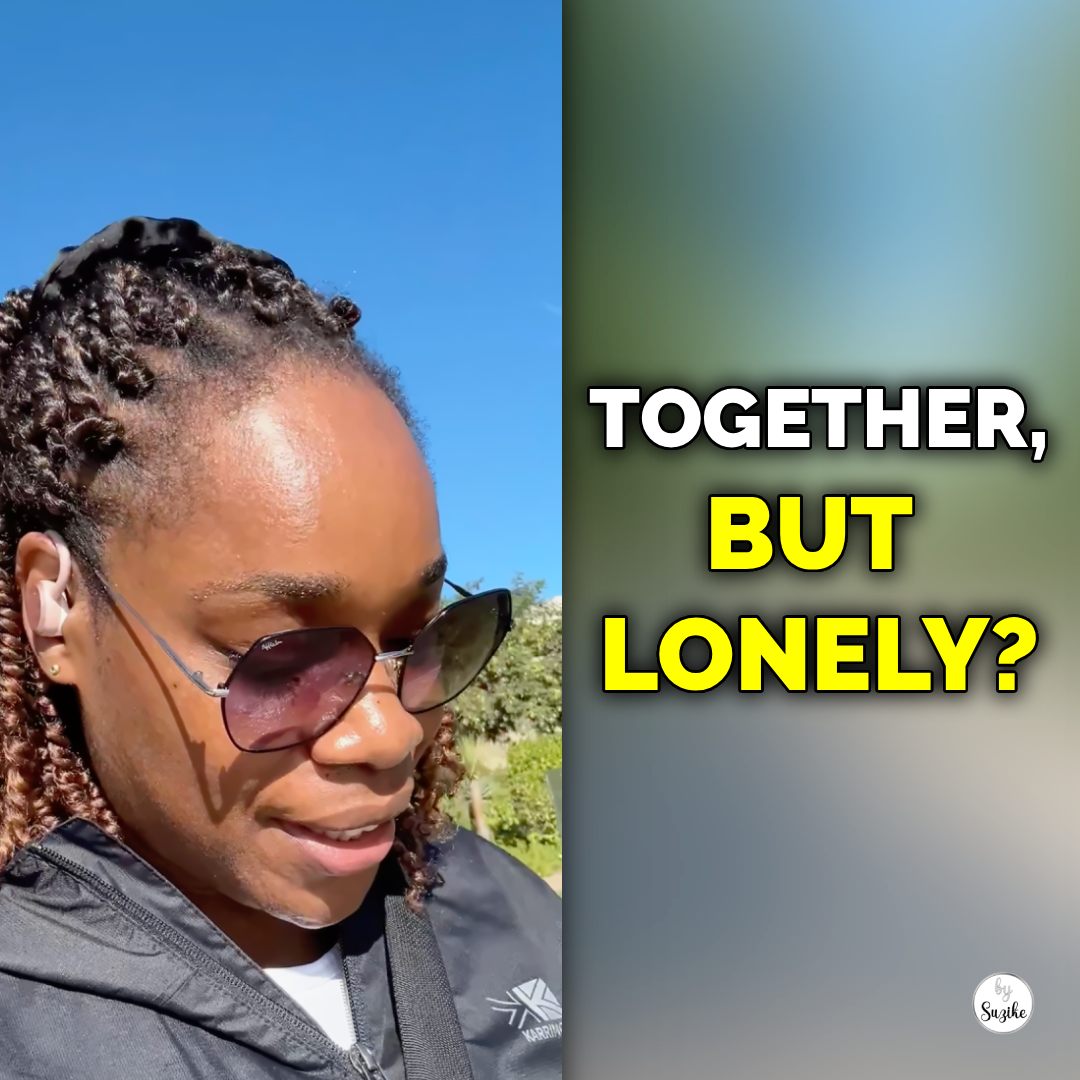
Prefer to listen? I talked about this in a new Conversations After 40 video, with some quiet moments from one of my walks in Lisbon.
You can keep reading below for the full reflection.
Why Feeling Alone in a Relationship After 40 Hurts So Much
There is something very specific about this pain after 40.
By this stage of life, a lot has usually already been carried. Work, motherhood, heartbreak, family responsibilities, money pressure, body changes, tiredness, disappointments, recovery, resilience, starting over, staying strong when there was no other option.
So when emotional loneliness appears inside a relationship, it does not land on an empty life. It lands on someone who may already be exhausted. I wrote more about that kind of emotional exhaustion in why so many women feel emotionally drained after 40, because sometimes the relationship is only one part of a much heavier inner load.
And that is why it hurts so much.
It is not only about wanting romance, affection or beautiful words. It is about wanting to feel that someone is emotionally beside you. Someone who notices when your mood changes. Someone who does not treat your silence as convenience. Someone who does not only hear you when there is a problem to fix.
For many women after 40, love becomes less about grand gestures and more about emotional presence.
A message that says, “I know today was hard.”
A look that says, “I see you.”
A conversation where you do not have to explain the same pain for the hundredth time.
A moment where you are not the one managing everyone else’s emotional temperature.
That is why feeling alone in a relationship can become so painful. It is not childish. It is not needy. It is not asking for too much.
It is the human need to be met emotionally by the person who shares your life.
When You Are Together, But Emotionally Far Apart
Emotional distance is strange because it can exist in the middle of daily life.
You can cook dinner together and feel distant. You can sit on the same sofa and feel miles apart. You can sleep in the same bed and still feel like your inner world has no witness.
And the worst part is that it can become normal little by little.
At first, you may notice the lack of conversation. Then you start speaking less because every attempt feels pointless. Then you stop explaining yourself because you already know the response. Then you become quieter, more practical, more self-contained.
From the outside, it may look peaceful. Inside, something is shrinking.
According to The Gottman Institute, emotional disconnection in relationships tends to build slowly, leaving partners feeling distant from each other even when nothing dramatic has happened.
You may start missing who you were before you became the woman who “understands”, “waits”, “does not want to start another conversation”, “does not have the energy tonight”, “keeps things moving”.
This is where the confusion usually starts. Because the relationship may still function. The house may still function. The family routine may still function. But functioning is not the same as feeling emotionally connected.
A relationship can look stable and still feel lonely.
The Difference Between Being Alone and Feeling Alone
Being alone can sometimes be peaceful. I actually think solitude can be beautiful when it is chosen. A coffee alone, a walk alone, a quiet evening, a moment where nobody is asking for anything. Bliss, honestly.
Feeling alone is different. Feeling alone is when your emotions have nowhere to go.
It is when you are sad and do not feel safe opening your mouth. It is when something good happens and you hesitate before sharing it, because the reaction may be flat, distracted or uninterested. It is when you are overwhelmed and already know that explaining it will turn into defending it. It is when you stop expecting emotional comfort from the person who is supposed to be closest to you.
That kind of loneliness does not always scream. Sometimes it becomes a quiet, controlled version of you.
You become efficient. You become calm. You become “fine”.
And honestly, “fine” can be such a dangerous word in relationships.
Because sometimes “fine” means, “I have stopped expecting you to understand.”
Why This Can Feel Stronger After 40
After 40, many women start becoming less available for emotional starvation.
There is less patience for being dismissed. Less tolerance for relationships that only work because one person keeps absorbing the discomfort. Less willingness to pretend that crumbs are enough.
And this is not because women suddenly become cold or difficult. It is because life starts asking different questions.
Do I feel peaceful here? Do I feel emotionally safe? These become real questions after 40, along with whether tiredness gets treated like a problem, whether honesty gets punished with silence, sarcasm or distance, and whether there is still room to exist beyond what you do for everyone else.
This is also why the question of whether love can exist without respect becomes so painful after 40, because emotional safety is not a decorative extra in a relationship.
After 40, the body also speaks louder. Tiredness feels heavier. Sleep matters more. Hormones change. Desire changes. Energy changes. The emotional cost of pretending becomes physical.
This is one of the reasons I also wrote about low libido after 40. Sometimes desire does not disappear because a woman has “changed” for no reason. Sometimes her body is simply responding to years of emotional distance, pressure, resentment, exhaustion or feeling unseen.
Because intimacy does not begin in bed. It begins in how you feel beside someone during ordinary life.
When Emotional Loneliness Starts Affecting Desire
There is a type of loneliness that slowly enters the body.
At first, it may feel like sadness. Then irritation. Then numbness. Then a strange lack of desire for closeness.
And again, the blame usually lands on the woman herself first.
She wonders why she is not more affectionate. Why she avoids touch. Why she feels tense when her partner comes close. Why she wants space, silence, sleep, or simply nobody touching her for five minutes.
But emotional disconnection has consequences.
When a woman feels emotionally alone, physical intimacy can start feeling like another demand instead of a place of connection.
That does not mean the relationship is automatically over. It does mean the body is giving information. The body often notices what the mind has been trying to negotiate away.
If you have been carrying resentment, disappointment, invisible labour, repeated conversations that led nowhere, or the pain of feeling emotionally abandoned, your body may stop offering easy access.
And no, that is not being dramatic. That is the body refusing to pretend everything is fine when something inside feels disconnected.
The Mental Load Nobody Sees
One of the reasons feeling alone in a relationship shows up so often after 40 is the mental load.
The mental load is not only doing things. It is remembering, planning, anticipating, checking, organising, noticing, preparing and emotionally managing life before anyone else realises something needs to be done.
It is knowing when the child needs new shoes. It is remembering the appointment. It is noticing the fridge is empty. It is planning the school week. It is tracking birthdays, forms, medication, laundry, meals, bills, moods, family tension and the invisible emotional weather of the house.
And on top of all that, there is often an expectation to be loving, attractive, patient, available and light.
Jeez.
Sometimes feeling alone in a relationship is not only about the absence of affection. It is about the absence of partnership.
It is the feeling that if you stopped thinking, the whole machine would collapse. And when you are the one holding everything together, it becomes very difficult to feel held.
I wrote more about this kind of pressure in burnout after 40, because sometimes the exhaustion is not only professional. It is emotional, domestic and deeply personal.
The Pain of Feeling Unseen
Feeling unseen in a relationship has a very specific ache. It is not always about compliments or attention. It is about recognition.
Recognition of your effort. Recognition of your tiredness. Recognition of your inner life. Recognition of the fact that you are not a service provider inside the relationship. You are a person.
There is a deep sadness in becoming useful but invisible.
The meals appear. The clothes are washed. The appointments are made. The emotional storms are managed. The family life keeps running. And yet the woman doing all that may feel like nobody is asking, “How are you really?”
After 40, this can become unbearable, because this is often when a woman starts to realise how much of her life has been spent adapting.
Adapting to moods. Adapting to silence. Adapting to lack of initiative. Adapting to disappointment. Adapting to the emotional limitations of someone else.
And at some point, the question becomes very simple. What about me?
Not in a selfish way. In a human way.
When You Start Missing Yourself
One of the saddest parts of feeling alone in a relationship is that you may begin to miss yourself.
The lighter version of you. The funnier version. The more sensual version. The version who had ideas, energy, laughter, curiosity, softness.
Sometimes the relationship does not only make you feel lonely. It makes you feel smaller. That feeling can also show up in a wider way, which is why I wrote about not feeling like yourself anymore after 40. Sometimes a relationship does not create the whole identity loss, but it can make it louder.
You may start editing your words. Avoiding topics. Swallowing reactions. Reducing expectations. Telling yourself that this is just adult life, long-term love, routine, tiredness, normal marriage, normal partnership, normal everything.
But there is a difference between the natural calm of a mature relationship and the emotional silence of a lonely one.
A mature relationship may be quiet, but it still feels alive. A lonely relationship may be busy, but something inside feels absent.
And when that absence continues for too long, you may not only question the relationship. You may question yourself.
Am I expecting too much? Am I the problem? Sometimes it feels safer to ask those questions than to face the alternative.
I think many women ask themselves these questions because it feels safer than facing the possibility that they are emotionally undernourished. Because if the problem is “me”, maybe I can fix it quietly. If the problem is the relationship dynamic, then something has to be seen. And that can feel terrifying.
What This Feeling May Be Trying to Tell You
Feeling alone in a relationship is information.
It may be telling you that there is a conversation you have been avoiding. It may be telling you that the relationship has become too practical and not emotionally intimate enough. It may be telling you that you have been carrying more than your share. It may be telling you that desire, affection and warmth cannot survive forever without emotional safety. It may be telling you that you are tired of being strong in a place where you wanted to feel soft.
This does not automatically mean everything is broken. Life is complex. Relationships go through seasons. People get tired. Stress changes behaviour. Parenthood changes couples. Financial pressure, health worries, ageing parents, work and disappointment can all create distance.
That grey area is exactly why I wrote Am I in a toxic relationship or am I just tired?, because not every painful relationship moment is easy to name while you are still living inside it.
But emotional loneliness deserves attention. Because when it is ignored for too long, it can turn into resentment. Then numbness. Then emotional withdrawal. Then one day, the woman who used to ask for connection stops asking.
And that is often when the other person suddenly notices something is wrong. By then, she may already be very far away inside.
The Quiet Grief of Still Caring
One thing people do not always understand is that feeling alone in a relationship does not mean you no longer care.
Sometimes you care deeply. That is exactly why it hurts.
If you did not care, the distance would not ache. The silence would not bother you. The lack of tenderness would not feel like rejection. The emotional absence would simply become background noise.
But when you still care, every little sign matters.
The distracted answer. The lack of curiosity. The way your tiredness is ignored. The way your emotions become “too much”. The way you slowly stop sharing pieces of yourself.
There is grief in that.
A quiet grief for the relationship you thought you had. A grief for the woman you were when you still believed things would change easily. A grief for all the moments where you wanted to be held emotionally and ended up holding yourself instead.
And sometimes, that grief is what finally makes a woman honest with herself.
Final Thoughts
Feeling alone in a relationship after 40 is not a small thing.
It can affect your mood, your body, your desire, your confidence and the way you see your future. It can make you feel guilty for wanting more and ashamed for feeling lonely beside someone who is technically there.
But emotional presence matters. Being seen matters. Feeling safe enough to be honest matters.
Being touched with tenderness after being treated with emotional distance all day is complicated. Being expected to stay warm when you feel unseen is complicated. Being the woman who keeps everything together while quietly falling apart inside is complicated.
And maybe the first honest step is simply naming it: I feel alone. As truth.
Because once a woman tells herself the truth, something changes. Even if the outside situation stays the same for a while, she is no longer gaslighting her own heart.
And that matters. A lot.
Where are you in this, right now?
Read Next
If this topic feels close to home, you may also find these articles useful: