
Selling on Vinted in Portugal is one of the most practical ways I have found to turn unused things at home into extra money.
The angle here is ordinary and realistic: opening cupboards, looking at clothes, books, shoes and toys that are no longer being used, and deciding whether they can keep taking up space or become money. It’s decluttering time! 😁
As a mother, a woman over 40 and someone actively building more financial flexibility in Portugal, I have become more aware of the value sitting quietly in ordinary things around the house. I recently wrote a broader post about how to make extra money in Portugal, and selling second-hand items was the first idea I mentioned because it is immediate, practical and requires nothing new. This post goes deeper into my actual experience with Vinted and whether I think it is worth trying.
Why I Started Selling on Vinted
I started selling on Vinted because I had too many things at home. That is the honest reason, but the fuller reason goes back a little further.
After my divorce, I sold the house. When I moved into this apartment, I found myself bringing things that had been sitting in storage at the old place for years. Some I donated. Others I threw away. And as I was doing it, I kept thinking: these could have been sold. This could have been money. Instead, it was just stuff that had been quietly forgotten in a corner, taking up space and doing nothing.
That experience changed how I see things at home.
The truth about stored items is simple: we forget they exist. They sit in cupboards, in boxes, in garages, in the back of wardrobes, and they become invisible. And invisible things do not help with groceries, fuel, school materials or the end of the month.
In this apartment, I decided to do things differently. I am selling the maximum I can. If something is not being used, it does not deserve the space it is occupying.
Over the years, items accumulate in ways we do not always notice. Clothes that no longer fit. Children’s books from stages already passed. Toys. Shoes. Bags. Accessories. Small things bought at different moments in life and stored away because maybe, someday, they might be useful again.
At some point, “maybe someday” becomes a very crowded cupboard and a lot of money sitting idle.
Selling on Vinted in Portugal felt like the most sensible place to start because the platform is already known, works well for the kind of items most families have lying around, and is simple enough to begin without any technical knowledge. There is also the space side of it. Physical space, yes, but mental space too. There is something genuinely satisfying about removing things from the house and knowing they are going to someone who actually wants them.
What I Sell and What Actually Moves
When I started, I focused on things that were easy to photograph, describe and send.
Clothes were the obvious starting point, both mine and my daughter’s. Children’s items make particular sense on Vinted because children grow quickly and many pieces are used for such a short time that they still have plenty of life left. Clothes, shoes, books and small toys can be useful for another family, especially when priced realistically.
Books can also work, depending on type and condition. Children’s books, language books and books in English can find the right buyer. I have many at home and it makes more sense to give them another life than to keep everything stored indefinitely.
From what I have observed, the items that tend to move better are clothes and shoes in good condition, pieces from recognisable brands at attractive prices, children’s items in good condition, and practical everyday accessories. Items that are complicated to describe, damaged, or missing parts are usually not worth the energy. The first listings are easier when they feel simple. That helps build momentum and keeps the process sustainable.
The Work Behind Every Sale
Selling on Vinted in Portugal is practical, but it is not effortless, and I think it is important to say that clearly.
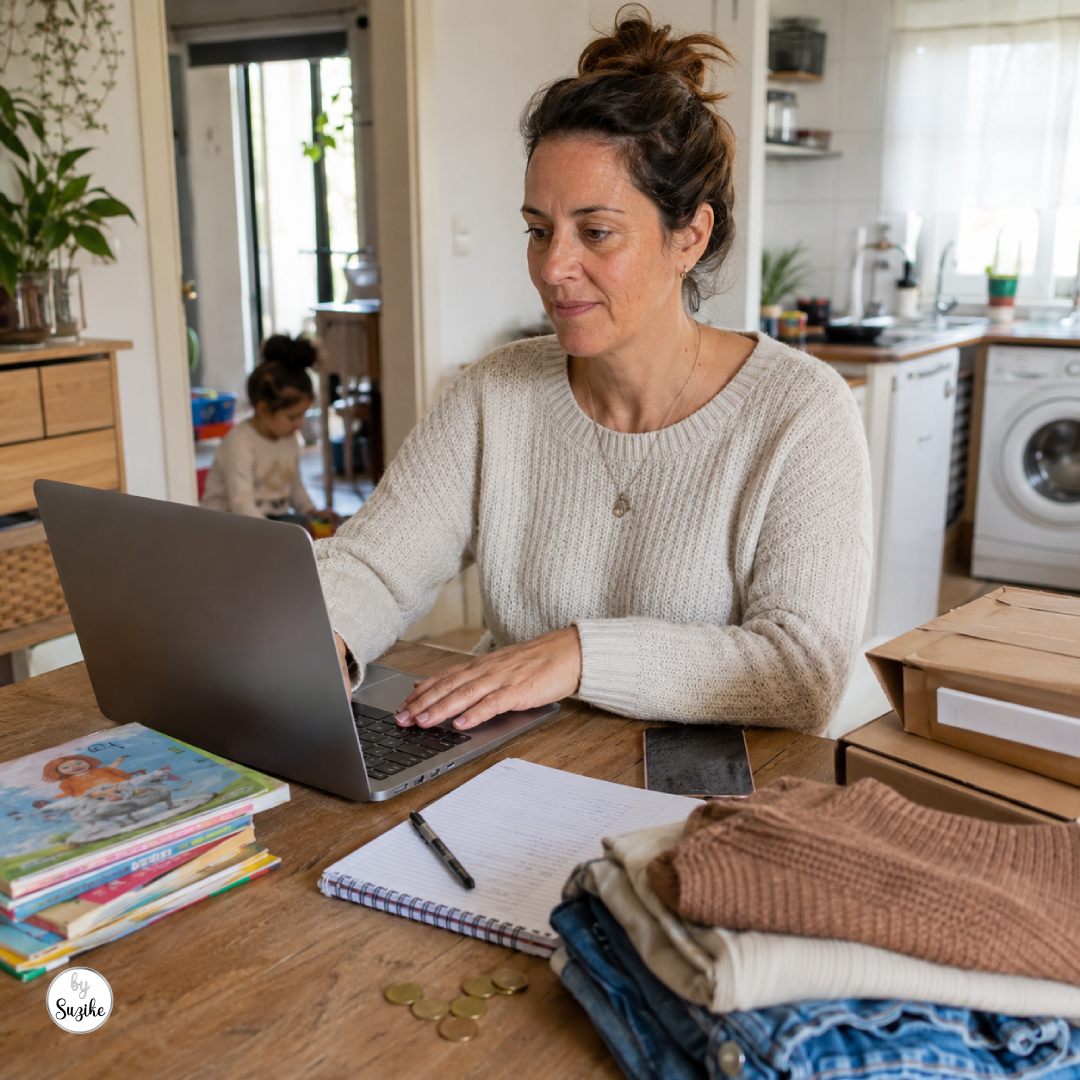
There is a process behind every small sale. The item needs to be photographed, ideally in natural light with a clean background. The description needs to be honest, with size, condition, brand and any visible flaws mentioned clearly. The price needs to make sense from a buyer’s perspective. Then there may be questions, offers, negotiations, packaging and a trip to the drop-off point.
For a five-euro sale, that can feel like quite a lot.
This is why I think Vinted works best when treated as a simple way to move items out of the house rather than a high-return business. It becomes frustrating when every item is expected to sell quickly or bring a higher price than the market supports. Some things sell fast. Some sit for weeks. Some buyers ask questions and disappear. That is part of it.
The systems that make it manageable for me are simple: photographing several items in one session rather than one at a time, keeping packaging materials in one place, and treating it as something I do gradually around real life rather than something that needs to take over a day.
The Importance of Realistic Pricing
Pricing is one of the most important parts of selling on Vinted, and also one of the easiest to get wrong.
Many of us look at an item and remember what we paid for it. The buyer sees something second-hand and compares it with many other similar options. Those are two very different perspectives, and only one of them determines whether the item sells.
I have learned that if my goal is to clear space and make extra money, the price has to encourage movement. I prefer selling something at a fair, accessible price than keeping it listed for months because I am emotionally attached to the original cost.
Three euros. Five euros. Eight euros. Ten euros. Individually, those numbers do not look dramatic. Together, across several items and several weeks, they can become useful. They can pay for small expenses, add to the food budget or simply create the feeling that money is coming in from more than one place. For me, that matters more than holding out for a higher price that may never arrive.
Is It Worth It for Mothers?
For many mothers, yes, selling on Vinted can be genuinely worth it.
Mothers often have exactly the kind of items that move well second-hand: children’s clothes, shoes, books, toys, baby items and school-related things. Family life creates a constant flow of items entering and leaving the home, and children outgrow things faster than most of us would like.
There is also the emotional layer, which I did not expect to matter as much as it does.
Selling children’s items can feel strange. There are memories attached to certain things. A tiny pair of shoes can carry more emotion than expected. A book, a dress, a small toy, all of it can hold pieces of a stage that has already passed.
That is real, and I do not want to dismiss it.
But keeping everything forever can become heavy too. For me, there is a balance. Some things are worth keeping. Others are ready to go. Selling them does not erase the memory. It simply gives the item a new life and frees space in the home, both physically and emotionally.
Is Selling on Vinted in Portugal Worth It?
For me, yes, with realistic expectations.
Selling on Vinted in Portugal is worth it if you already have items at home in good condition. It is worth it if you are comfortable with small sales adding up gradually. It is worth it if you want to clear space and create a little extra income at the same time. It is worth it if you see it as one part of a bigger financial picture rather than a complete solution.
To give you a real sense of what that looks like: some months I make around €30. Other months nothing sells. Other months closer to €50. It depends on what I have listed, the time I put in and simple luck with buyers. It is not consistent and it is not dramatic.
But here is what I have noticed: that money pays for the water bill. Or a tank of fuel. Or milk and a few basics at the supermarket. Without touching the bank account.
Every cent counts. Especially at the end of the month when life in Portugal has already taken most of what came in.
It may feel less worth it if you expect fast, high-profit returns from ordinary second-hand items. It can also feel tiring if you dislike the process of photographing, messaging, packing and shipping.
That is why I see Vinted as practical rather than magical. And practical, in real life in Portugal, is genuinely useful.
You can visit my Vinted profile here: BySuzike on Vinted, where I currently have clothes, books, children’s items and everyday pieces listed.
For more practical money posts from real life in Portugal, you can explore my Money & Real Life section.
FAQs About Selling on Vinted in Portugal
This post is also part of my Life Tips in Portugal hub, where I gather practical routines, home systems, money ideas and everyday solutions for life after 40.

Leave A Comment