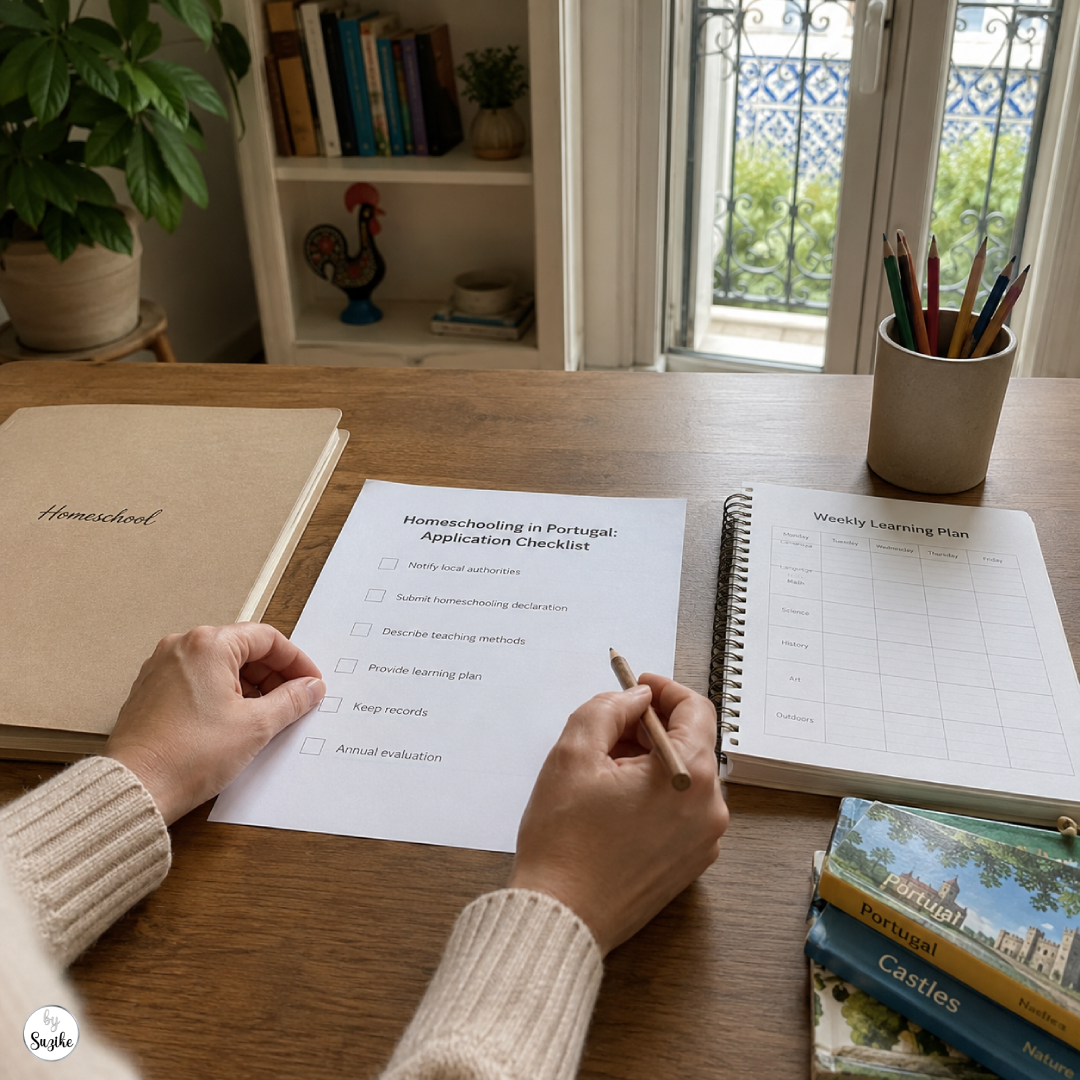
Updated in May 2026: this how to homeschool in Portugal guide reflects the current homeschooling framework in Portugal.
Homeschooling in Portugal is legal, regulated and connected to the Portuguese education system. This guide walks you through the main steps, from the initial decision to assessment and certification.
Before You Start: Understand the Main Concepts
A few terms come up throughout the process. Here is what they mean in the Portuguese system.
| Concept | Description |
|---|---|
| Homeschooling, or ensino doméstico | is education provided at the student’s home by a family member or by someone who lives with the student. |
| Individual Teaching, or ensino individual | is education provided to one student by a qualified teacher outside a school setting.
Read more about the Tutor’s Role in Homeschooling in Portugal here. |
| Enrollment school | is the school where the student is officially enrolled. Even when the child learns at home, the school remains responsible for monitoring and certifying the learning process. |
| Responsible educator | Record of the student’s curricular and pedagogical-didactic path, organized with documentation and information on evidence of work and learning carried out by the student, presented in various media. |
| Teacher-tutor | is the teacher appointed by the school to follow the student’s educational process. |
| Collaboration Protocol | is the agreement between the school and the parent or legal guardian. It defines how the learning process will be organised, monitored and assessed. |
| Home Educator | In homeschooling, the student’s family member or the person who lives with him/her; In individual teaching, the teacher appointed by the parent. |
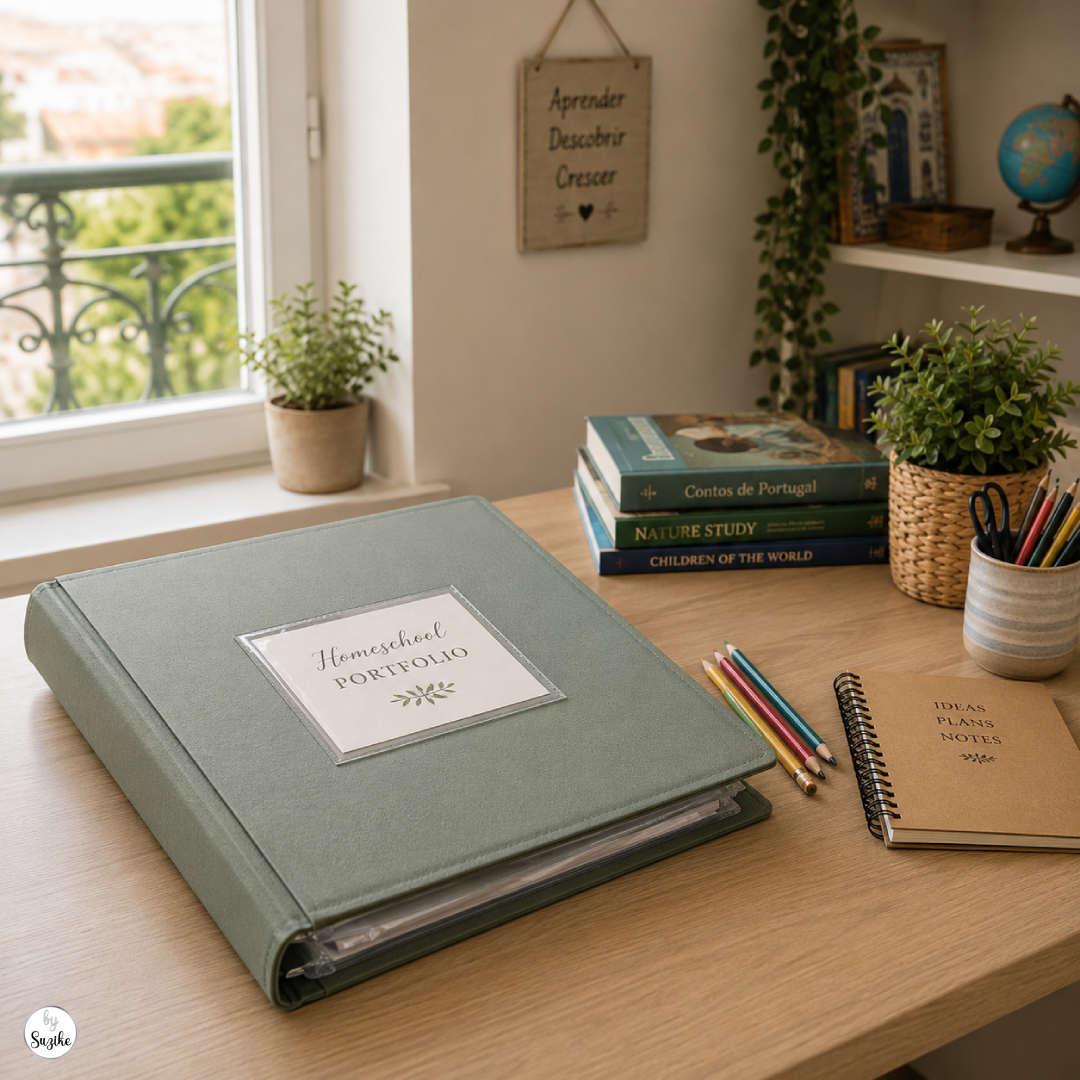
| Student Portfolio | is the organised record of the child’s learning, including evidence of work, progress, activities, assessment and reflection. |
New to Homeschooling in Portugal?
If you need the general overview before following these practical steps, start with the main guide. It explains what homeschooling means in Portugal, who it may suit, how it differs from individual teaching and what parents should know before making a decision.
Important Notes for Expat Families
Families living in Portugal follow Portuguese education rules regardless of language spoken at home. Homeschooling remains connected to the Portuguese curriculum, and assessment and certification apply in Portuguese.
For children adjusting to a new country and language, it is also worth thinking about integration: opportunities to engage with Portuguese language, daily life and social environment are part of the bigger picture.
Homeschooling is possible for expat families, and works best when planned within the Portuguese education context from the start.
Common Mistakes to Avoid
Assuming that homeschooling in Portugal works like homeschooling in other countries is the most common source of confusion. The Portuguese model has its own structure, school connection and monitoring requirements.
Other situations that create difficulty: starting without confirming the responsible educator requirement, leaving the portfolio until the end of the year, or assuming that private tutoring automatically qualifies as individual teaching under Portuguese law.
Final Thoughts
Homeschooling in Portugal works well when families go in with accurate expectations: it requires preparation, organisation and ongoing engagement with the school.
The process is manageable. It just needs a clear system from the start.
If you are still at the research stage, the main overview is a good next step.
Leave A Comment