A kettlebell can be one of the most useful pieces of equipment for home workouts, especially when you want strength, conditioning, and practical training without needing a full gym setup.
When you train at home, space matters. Time matters. Equipment needs to be simple, useful, and easy to include in a realistic routine. That is why a kettlebell can make so much sense for home fitness.
For me, kettlebell training became part of my routine because it allows me to train strength and conditioning in a compact way. I do not need a large space. I do not need several machines. I can do a short session at home and still feel that my body worked properly.
This is especially useful after 40, when consistency, strength, mobility, balance, and confidence in movement become even more important. A kettlebell can help you build a stronger body at home, as long as you use it with control, respect your level, and choose a weight that makes sense for your current strength.
Why a Kettlebell Matters at Home
A kettlebell is useful because it gives you many training options with one piece of equipment.
You can use it for strength exercises, conditioning, functional movements, lower-body work, core training, grip strength, and short full-body sessions. That makes it very practical for home workouts.
At home, this matters because most people do not have unlimited space. You may be training in your living room, bedroom, garage, or a small corner of the house. A kettlebell does not take up much room, but it can still add real challenge to your routine.
That is one of the main reasons I like it.
A kettlebell can sit in a corner and still become part of several different workouts during the week. It is simple, compact, and effective when used properly.
A Kettlebell Helps You Build Strength at Home
One of the biggest benefits of kettlebell training is strength.
You can use a kettlebell for exercises like goblet squats, deadlifts, rows, presses, carries, and controlled lower-body work. These movements can help you train your legs, glutes, back, arms, shoulders, and core.
For home workouts, this is useful because you can train several areas of the body without needing a large collection of equipment.
A kettlebell can help with:
- Lower-body strength
- Core control
- Glute work
- Back strength
- Grip strength
- Functional movement
- Full-body training
- Conditioning
- Short home workouts
For women over 40, strength training matters because muscle, balance, posture, and daily energy become more important with time. You do not need to train like an athlete to benefit from strength work. You need movements that feel realistic, repeatable, and appropriate for your body.
A kettlebell can support that very well.
It Can Make Short Workouts More Effective
Some days, I do not have time for a long workout.
That is where kettlebell training becomes useful. A short kettlebell session can still feel focused and effective because the exercises often involve several muscle groups at once.
You can do a simple 15 or 20-minute session and feel that you trained properly.
This is one of the reasons kettlebells work so well for home fitness. They reduce the amount of setup needed. You do not need to prepare several machines or move between different pieces of equipment. You can choose a few exercises and get started.
That matters when your routine is busy.
A workout that is easy to start is much more likely to happen.
Kettlebell Training Feels Practical for Real Life
Kettlebell training has a very practical feeling.
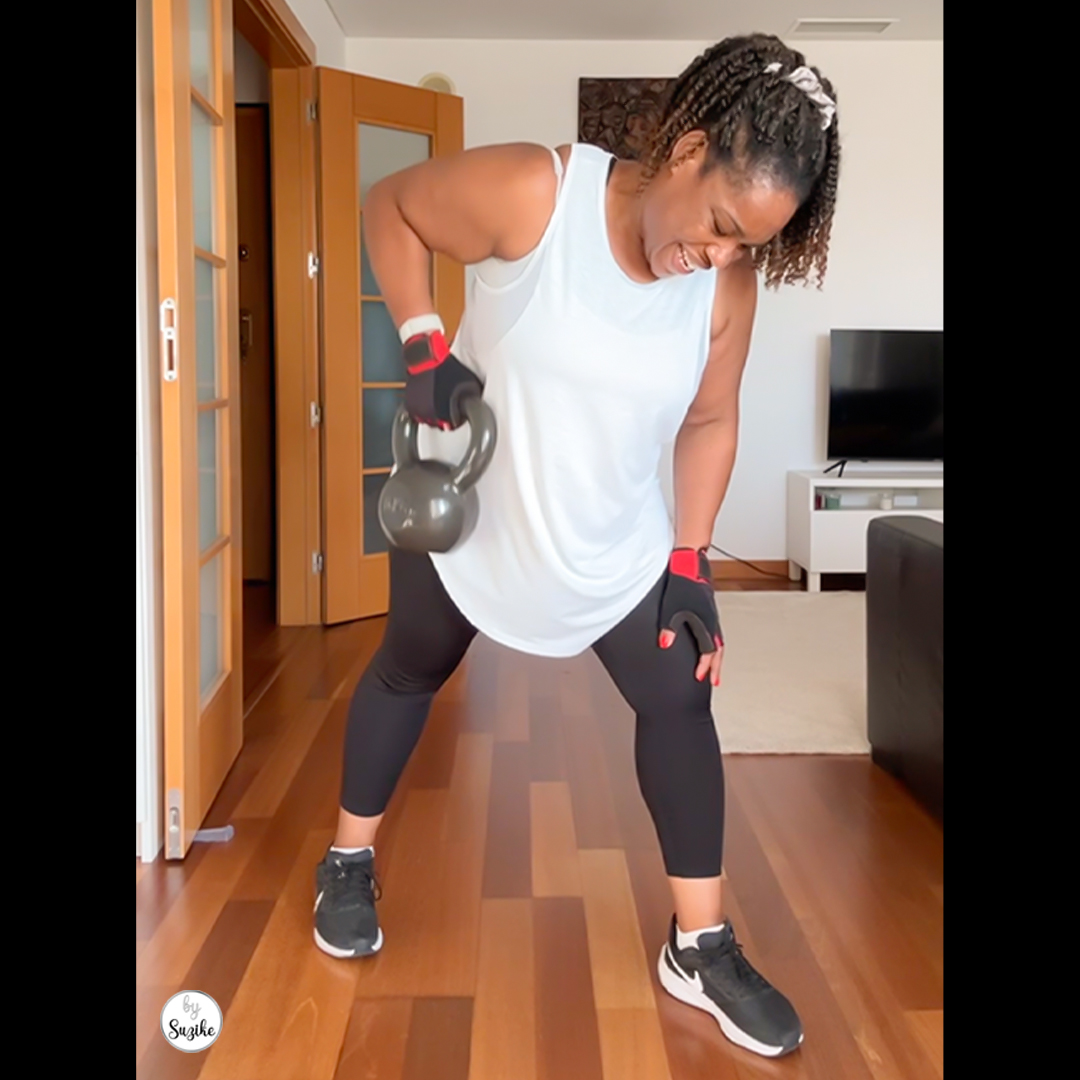
Many exercises involve lifting, carrying, hinging, squatting, stabilising, and controlling weight. These are movements that connect well with real life because they help your body become stronger in ways that feel useful.
For me, this is one of the reasons I like kettlebells.
The movements feel direct. You pick up the weight, control it, move with intention, and build strength through repetition. There is something very simple and honest about that.
At home, this kind of training can be powerful because it does not require a perfect setup. It requires attention, control, and consistency.
How I Use My Kettlebell at Home
I use my kettlebell as part of my weekly home fitness routine.
Some sessions are short and focused. Other times, I include kettlebell work alongside bodyweight exercises, resistance bands, mobility, or stretching. I also use it when I want a strength-based workout without going to the gym.
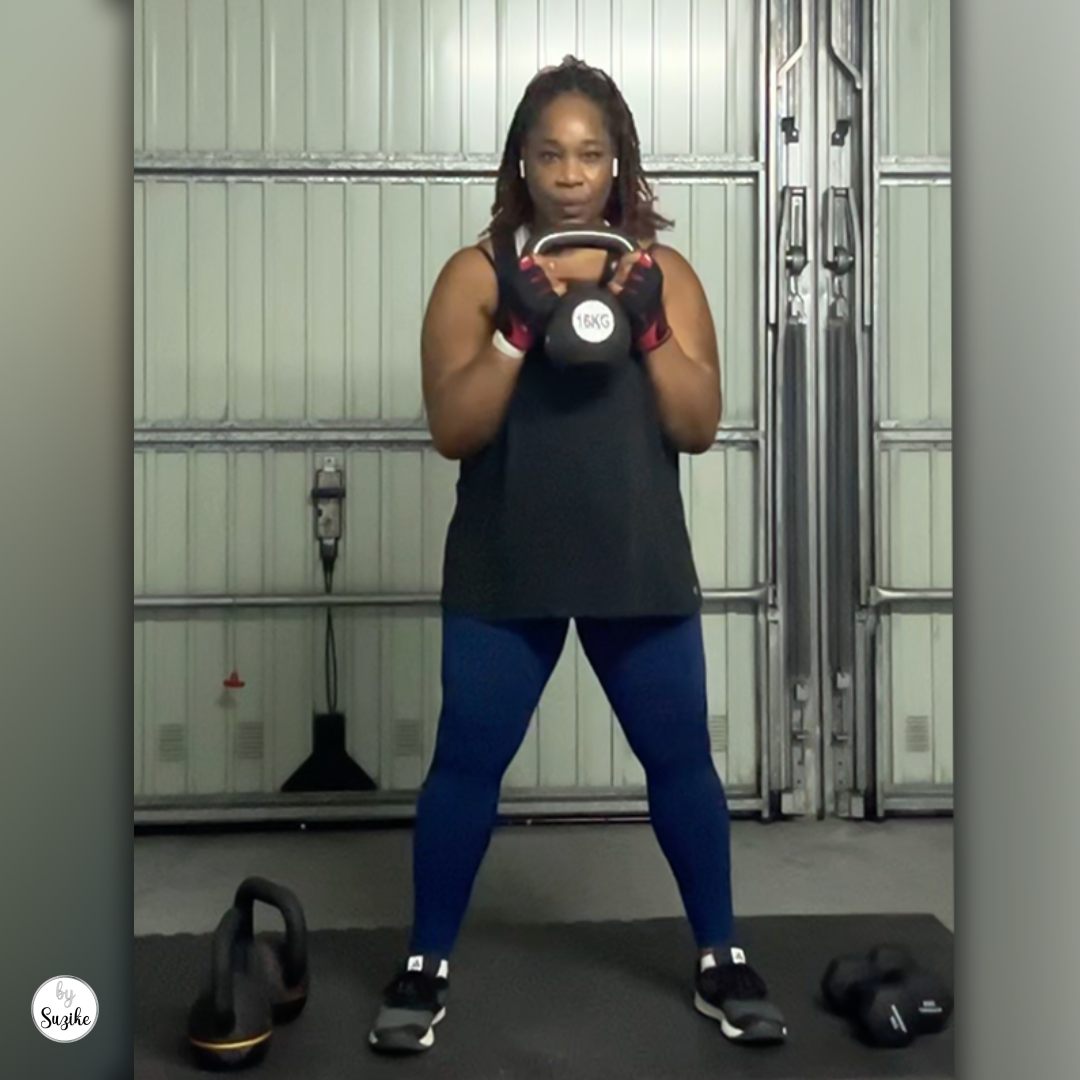
My kettlebell sessions usually include movements like swings, goblet squats, deadlifts, rows, and controlled strength exercises. I prefer workouts that feel simple, direct, and realistic for the space I have at home.
For me, the value of a kettlebell is that it helps me train seriously without needing a complicated setup.
It is one of those pieces of equipment that makes home training feel more complete.
What to Look for in a Good Kettlebell
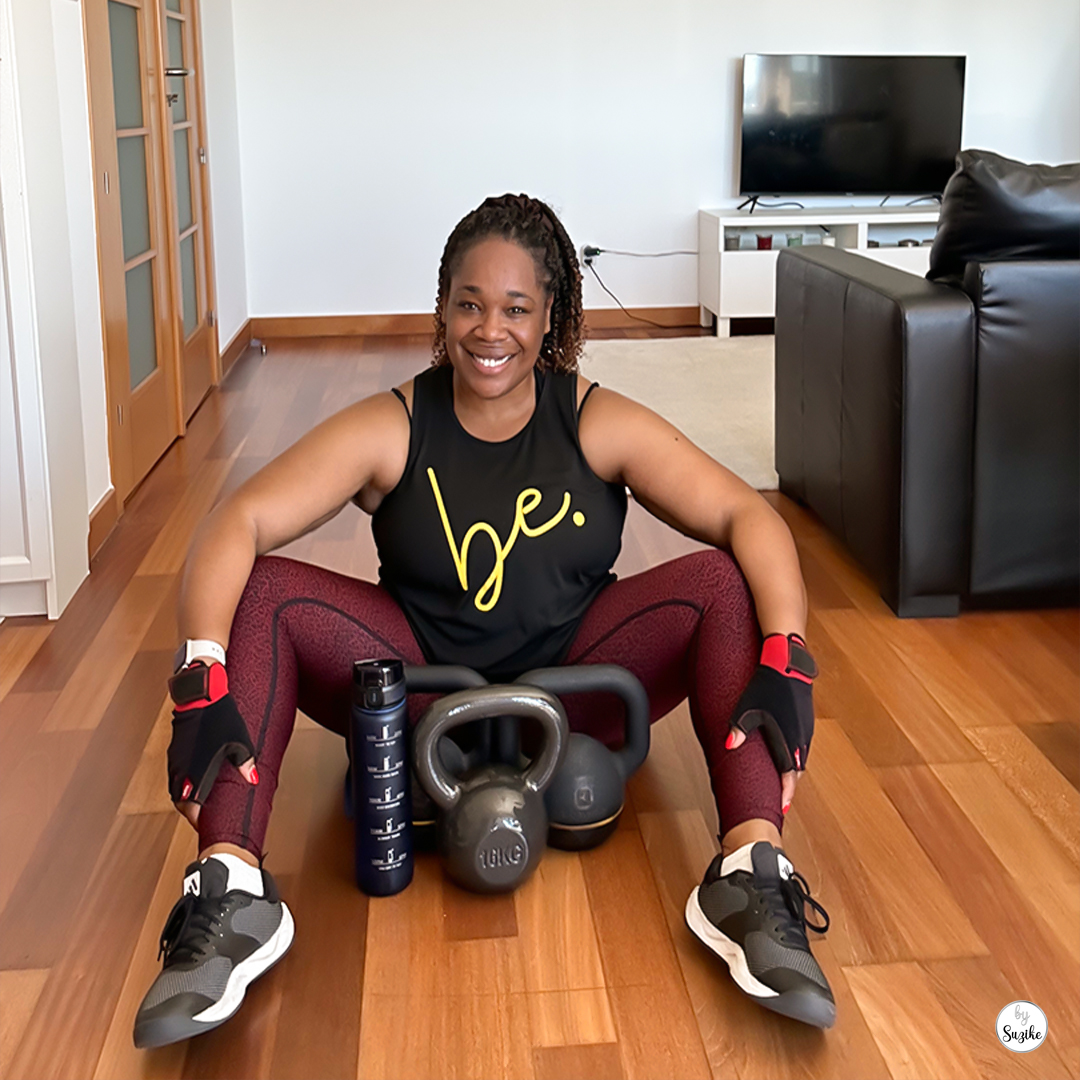
A kettlebell does not need to be fancy, but it does need to feel safe, stable, and comfortable to use.
These are the things I would pay attention to.
1. The Right Weight
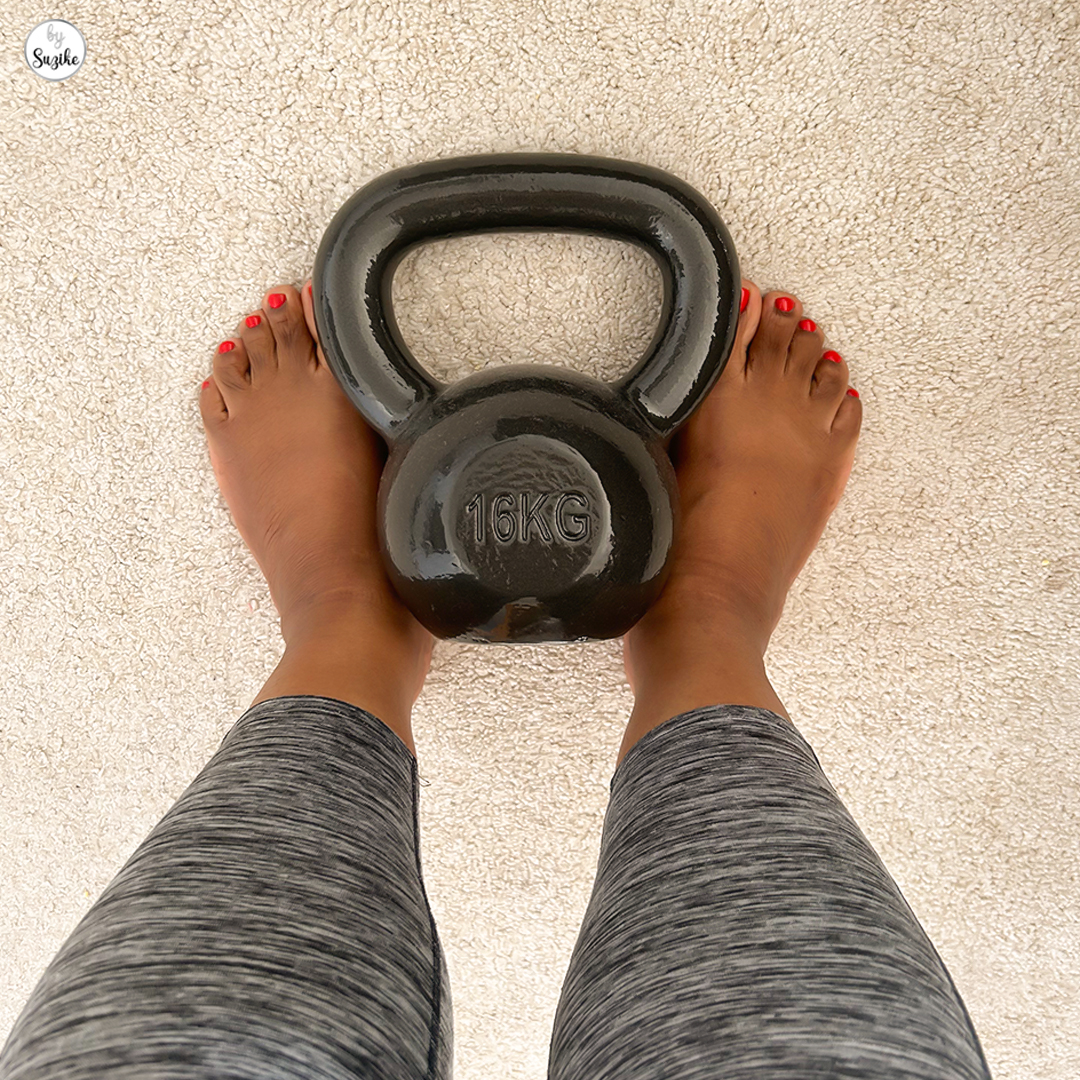
The weight matters more than the look of the kettlebell.
If it is too light, it may not challenge you enough for strength training. If it is too heavy, your form can suffer and the workout becomes less controlled.
For beginners, it usually makes sense to start with a weight that feels challenging but manageable. The right weight depends on your current strength, your experience, and the exercises you want to do.
For home workouts, control should come first.
2. Comfortable Handle
The handle is very important.
A kettlebell should feel comfortable in your hands. If the handle is too rough, too narrow, too slippery, or awkward to grip, the workout becomes frustrating.
You want a handle that allows you to hold the kettlebell securely during movements like deadlifts, rows, squats, carries, and swings.
Grip comfort matters, especially if you use the kettlebell regularly.
3. Stable Base
A flat, stable base is useful for home training.
If the kettlebell sits properly on the floor, it feels safer and easier to store. It also helps when you use the kettlebell for exercises where it needs to rest on the ground between movements.
At home, this matters because you want equipment that feels secure in your space.
4. Durable Material
A kettlebell should feel solid.
You want something that can handle regular use without feeling fragile. If the coating chips too easily, if the handle becomes uncomfortable, or if the kettlebell feels poorly made, it may not be ideal for long-term use.
Durability matters because kettlebells are equipment you may use for years.
5. Easy Storage
One of the best things about kettlebells is that they are easy to store.
You can keep one in a home gym corner, beside your mat, in a garage, or in a small workout space. It does not need much room, which makes it practical for home fitness.
The easier it is to access, the more likely you are to use it.
When a Kettlebell Is Especially Useful
A kettlebell is especially useful if you want compact equipment that supports strength and conditioning.
It can work well for:
- Home workouts
- Strength training
- Lower-body exercises
- Glute work
- Functional training
- Short workouts
- Conditioning
- Core control
- Grip strength
- Simple home gym setups
It is also useful if you want equipment that can grow with you. As your strength improves, you can increase the challenge through more controlled reps, better technique, longer sessions, or eventually heavier weight.
When a Kettlebell Is Not Enough
A kettlebell is useful, but it has limits.
If your goal is a complete strength programme with very precise progressive overload, you may eventually need more than one weight. You may also need dumbbells, a barbell, machines, or heavier equipment depending on your goals.
Some exercises also require good technique. Kettlebell swings, cleans, snatches, and more dynamic movements need control and proper progression. If you are new to kettlebells, it makes sense to start with simple movements before moving into faster or more complex exercises.
This is especially important at home because you are often training without direct supervision.
A kettlebell can be an excellent tool, but it should be used with attention.
More workouts using this kettlebell.
A Kettlebell Can Help You Stay Consistent
One of the reasons I like kettlebells for home workouts is that they make training easier to start.
You do not need a long setup. You do not need a full gym. You do not need to prepare several pieces of equipment.
You can pick up the kettlebell, choose a few movements, and begin.
That can be a short strength session. It can be a 20-minute full-body workout. It can be a lower-body session. It can be a simple routine when you want to move but do not want something complicated.
Consistency often comes from workouts that fit into real life.
A kettlebell helps with that because it is simple, compact, and effective.
Is a Kettlebell Worth It for Home Workouts?
Yes, if you want one piece of equipment that can support strength, conditioning, and practical home training.
A kettlebell is one of the most useful pieces of home fitness equipment because it allows you to train several movement patterns with limited space. It can make short workouts feel stronger, more focused, and more complete.
For women over 40, I think kettlebell training can be especially valuable because it supports strength, balance, confidence, and functional movement. The key is choosing an appropriate weight and using it with control.
You do not need a full home gym to begin. A mat, a kettlebell, and enough space to move safely can already give you a strong foundation.
Related Home Fitness Resources
If you are building a simple home fitness routine, you may also find these helpful:
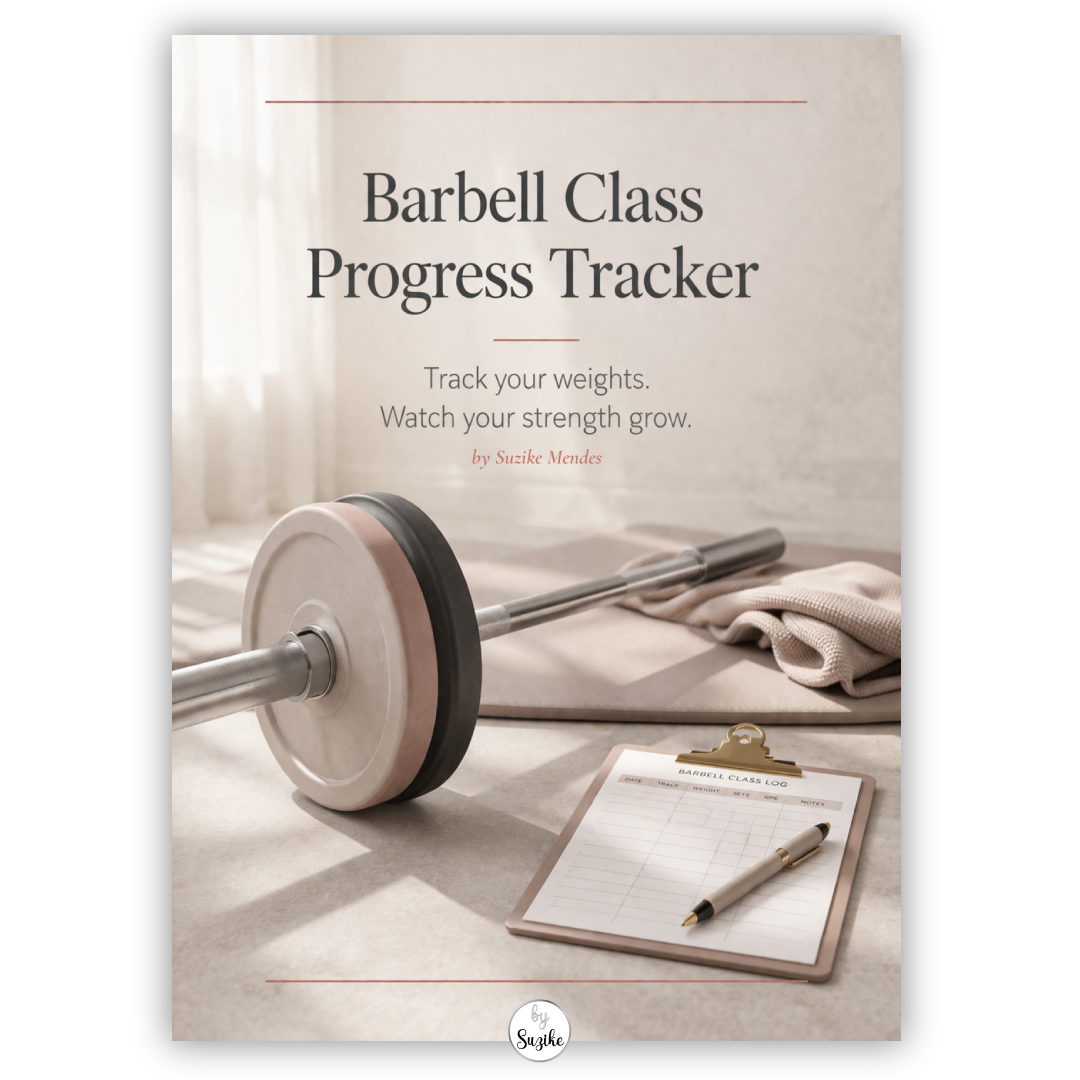
If you also train with a barbell, I created a simple tracker to log weights, stay consistent, and actually see your progress over time.
You can find it here: Barbell Class Progress Tracker for Women 40+.
Final Thoughts
A kettlebell may look simple, but it can become one of the most valuable pieces of equipment in a home workout routine.
It helps you build strength. It adds challenge. It works in small spaces. It supports short sessions. It can make home training feel more focused and more complete.
For me, a kettlebell is useful because it fits into real life. I can use it at home, combine it with other equipment, or keep the session simple when I do not have much time.
That is exactly what good home fitness equipment should do.
It should make movement easier to start, easier to repeat, and strong enough to matter.