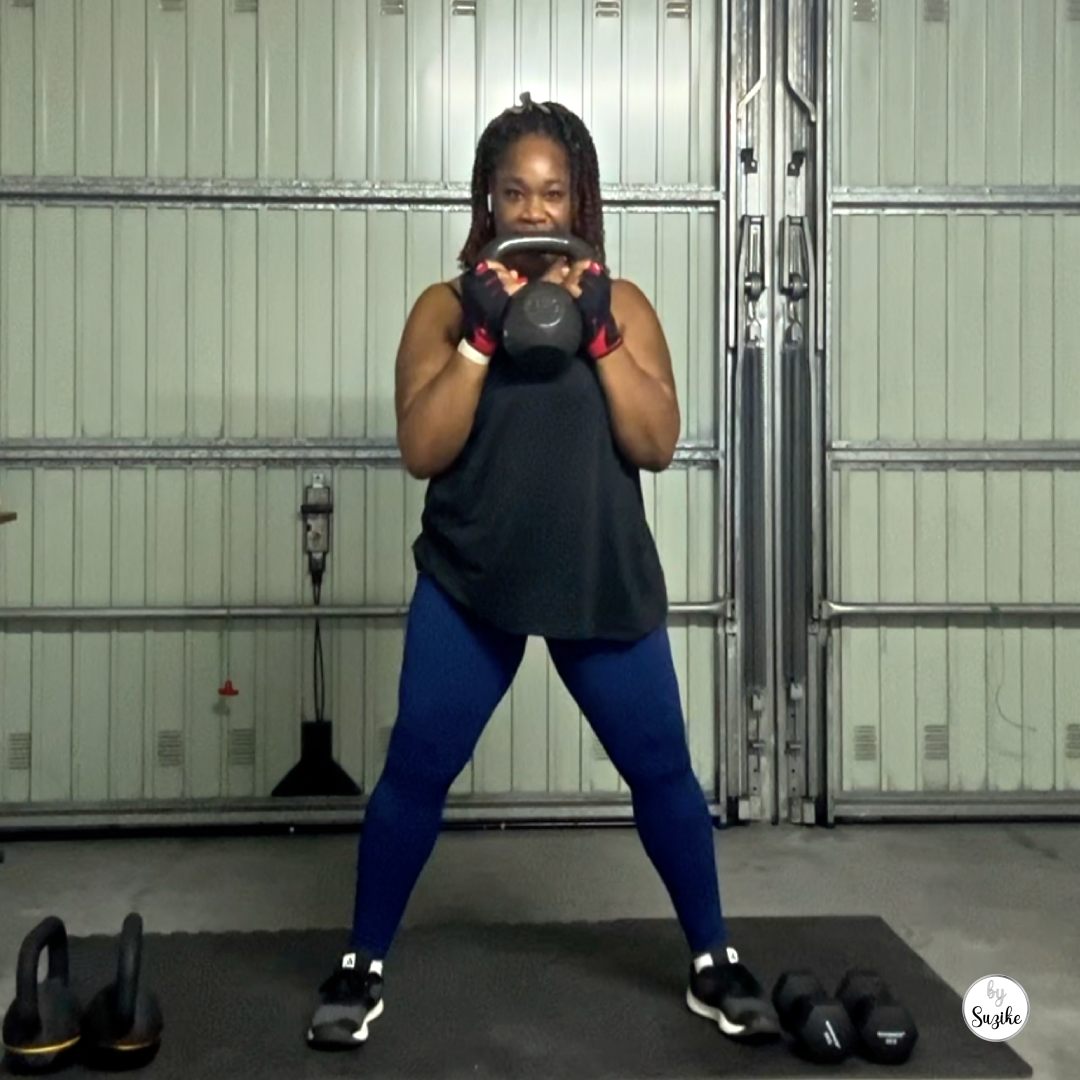
Since 2010, Kettlebells are the piece of equipment I keep coming back to. Not because they are trendy, not because a fitness influencer told me to, but because a single kettlebell has carried me through full body days, leg days, core work, and upper body sessions, all without needing a home gym. If you have ever wondered what training with kettlebells actually feels like day to day, this kettlebell training review is my honest answer, based on real repeated experience, not a one time trial.
That is really the strange part about kettlebells. The equipment could not look simpler. It is just a ball of iron with a handle. And yet a single kettlebell session can ask for strength, conditioning, balance, grip, and coordination all at once. That combination is a big part of why I kept training with them.
Quick Verdict
Kettlebell training is one of the most efficient training styles I have used. You do not need a room full of equipment or an hour of free time. A short session with one or two kettlebells can still feel like real training, not a warm up that never became a workout.
The intensity range is enormous. The same tool that lets you build strength slowly and deliberately can also turn into a conditioning session that leaves you breathing hard within a few rounds. That flexibility is part of the appeal, but it also means the “simple equipment” idea can be misleading. Simple does not mean easy, and it does not mean every movement is technically simple either.
For home training in particular, kettlebells earn their place. Little setup, little space, and a lot of training options from one object.
Kettlebell Training Snapshot
Workout type: strength and conditioning / functional strength training
Where I usually train: at home
Typical duration in my experience: approximately 20 to 30 minutes
Equipment: one or two kettlebells, sometimes combined with dumbbells or a mat depending on the workout
Weights used: I have trained with more than one kettlebell weight over time, and the right weight really depends on the exercise, so I am not going to hand you a single universal number here
Main focus: full body strength, legs, glutes, back, shoulders, arms, core, grip and conditioning depending on exercise selection
Intensity: highly variable
Beginner-friendly: potentially yes, especially when you start with controlled movements and learn the technique before adding speed
Best for: efficient home strength training, limited equipment, short workouts, and people who like a training setup that does not overcomplicate things
Watch What My Kettlebell Training Looks Like
Instead of describing what a kettlebell session looks like in theory, I wanted to show you an actual one. This is not a staged demonstration filmed for the camera. It is training the way I actually do it at home.
What Is Kettlebell Training Really Like?
One thing worth clearing up before anything else: there is no single kettlebell workout format. Kettlebell training is not a branded class like Les Mills, where every session follows a fixed structure. It is closer to a training tool that gets shaped into whatever the day calls for.
A session can be strength focused, conditioning focused, or a blend of both. It can target the whole body in one go, or narrow in on legs, core, or upper body. Some workouts are built around straightforward sets and reps, others turn into timed circuits or rounds against the clock. The same kettlebell can be used for a slow, controlled deadlift and, a few minutes later, for a fast, rhythmic swing. Load, movement selection, and rest all change the experience dramatically, which is exactly why two kettlebell workouts can feel completely different from each other even though the equipment never changed.
My Experience With Kettlebell Training
I did not try one kettlebell workout, decide I liked it, and write a review off a single session. Kettlebell training became one of the styles I kept returning to, across a lot of different formats.
Over time I have used kettlebells for short twenty minute circuits, full body days, dedicated core sessions, leg and lower body training, and upper body work. I have combined kettlebells with dumbbells on days that needed a bit more variety, and I have also had sessions built around only a handful of exercises, kept deliberately simple. That range is part of why kettlebells never got boring for me. There was always another way to structure a session with the same piece of equipment.
Steve Cotter and the Training That Influenced Me
One name I cannot leave out of this kettlebell training review is the late Steve Cotter.
If you have spent any time around serious kettlebell training, his name will probably be familiar. Cotter founded the International Kettlebell and Fitness Federation (IKFF) in 2008 and became one of the best known educators in modern kettlebell training, teaching across dozens of countries over the course of his career. His approach drew from a wider movement background that combined kettlebells with strength and conditioning, martial arts, and mobility work. Cotter passed away in January 2025, and the kettlebell community continues to recognize the impact of his work.
What always made his material particularly valuable to me was that it did not treat the kettlebell as just another weight. There was technique behind it. Movement mattered. Control mattered. And once the exercises were combined into circuits, something that looked incredibly simple could become a very demanding full-body workout.
I trained with his Extreme Kettlebell Workouts DVD, and his Extreme Kettlebell Circuit Workout became part of my own kettlebell experience. I still have an old training entry where I recorded doing twenty minutes of that circuit, and it was not something I watched once and forgot about. The way those movements combined into a compact, demanding session influenced how I later approached my own home kettlebell circuits.
To be clear, I never trained with Steve Cotter personally. I learned from his material. But there is a real difference between following a random workout online and learning from someone whose material actually teaches you how a training method fits together. Cotter’s work helped me understand kettlebells as a training modality, not simply as a piece of equipment.
One of my own approximately twenty minute circuits, inspired by that training, eventually looked like this:
- Low-high windmill, 5 reps each side
- Renegade row, 5 reps each side
- Suitcase deadlift, 5 reps each side
- Double snatch, 5 reps
- Plank, 30 seconds
- One-legged deadlift, 5 reps each side
- Clean and press, 5 reps
- Repeat for 3 rounds
That circuit still shows up in my training, and I go into more detail about it in my Kettlebell for Busy Moms post, where it fits particularly well as a short, efficient session for a day with limited time.
Looking back, I think that is one of the reasons kettlebells stayed with me. Steve Cotter’s training showed me how much you could do with a deceptively simple piece of equipment when technique, movement, and intelligent programming came together.

What a Kettlebell Workout Actually Feels Like
Hinge and Power Work
Swings and deadlifts show up regularly in my kettlebell training, and they feel completely different from each other even though both work the posterior chain. A deadlift is slow and deliberate, you feel every part of the lift from the floor up. A swing is rhythm and power, driven from the hips, not the arms, and it changes the pace of the whole workout the moment it shows up in a circuit. Grip becomes part of the conversation quickly, especially once fatigue sets in and the handle starts to feel like it is working against you a little.
Lower-Body Strength
Goblet squats, deadlifts, and one-legged deadlifts have all been part of my lower body kettlebell training, and the fatigue builds differently than it does with a barbell. Holding the load in front of you for a goblet squat changes your posture and core engagement compared to a back squat, and the one-legged deadlift adds a balance demand that a two-legged version simply does not have. By the last few reps of a set, my legs and my stability are both being tested at the same time.
Upper-Body Work
Rows, renegade rows, and clean and presses are where kettlebells shift from lower body into upper body without me ever putting the equipment down. That transition is one of the things I genuinely like about training this way. One kettlebell, a change in grip and movement pattern, and suddenly the workout is asking something different of my shoulders, back, and arms.
Core and Stability
Core work in kettlebell training rarely looks like a crunch, and that is a good thing. Windmills demand rotation and control at the same time. Renegade rows force the whole midsection to stabilize while one arm rows and the other holds a plank position. Unilateral, loaded movements end up training the core almost as a side effect, which is part of why kettlebell sessions leave my midsection more tired than I expect, even on days I did not plan a dedicated core workout.
Conditioning
This is where kettlebell training can surprise you. A session that starts out feeling like straightforward strength work can turn into a conditioning session fast, just by shortening rest periods or stacking exercises into a circuit. Swings especially do this. What feels like a strength movement in isolation becomes a cardiovascular challenge once it is repeated for time or combined with other exercises back to back.
Why Kettlebells Feel So Efficient
This is one of the biggest reasons kettlebells kept a permanent spot in my training. There is very little setup involved, barely any space required, and one main piece of equipment can carry an entire session. Compound movements mean you are rarely isolating a single muscle, and the ability to move between strength and conditioning without changing equipment keeps sessions short without making them feel incomplete.
A good example is one of my simplest kettlebell workouts, built around just twelve swings, ten goblet squats, and ten deadlifts, repeated for four rounds. It sounds almost too basic on paper, but it delivers a real training effect in about twenty minutes. I go into the full structure in my 20-Minute Kettlebell Workout at Home post if you want to try it exactly as written.
What I Like Most About Kettlebell Training
Efficiency is the word that comes up most when I think about why I keep training this way. A short session with one kettlebell can still feel satisfying, and the home setup could not be easier, no equipment room, no waiting for machines, no drive to a gym.
I also like that progression feels tangible. I started training with a 6 kg kettlebell, and now I regularly work with a 20 kg one. Moving up in weight, or handling the same weight with better technique, is something I can actually feel from session to session. The variety keeps things interesting too. Switching between strength-focused days and conditioning-focused days with the same equipment means the training never gets stale, and it never requires a complicated setup to make that switch happen.
What I Find Most Difficult
A real review needs the downsides too, so here they are. Grip fatigue can become a limiting factor for me, particularly in longer circuits with repeated swings and rows.
Technique gets harder to maintain as fatigue builds, which means the later reps in a set need more attention, not less. Choosing the right kettlebell for different exercises is trickier than it sounds. A weight that feels appropriate for a deadlift might be completely wrong for an overhead movement, and dynamic movements like snatches and clean and presses take more practice to get comfortable with than a simple squat or row does. Heavier is not automatically better, and rushing through reps to finish faster tends to ruin technique before it improves fitness.
Is Kettlebell Training Beginner-Friendly?
Potentially yes, but I want to be clear about one thing: equipment simplicity should not be confused with movement simplicity. A kettlebell is an uncomplicated object, but that does not mean every kettlebell exercise is simple to execute well.
Starting with more controlled patterns, like a basic deadlift, a goblet squat, or a row, gives you a foundation before moving toward more dynamic or technical movements like swings, snatches, or windmills. Technique before speed and technique before load is the order that has worked for me, and it is the order I would recommend to anyone starting out.
What Kettlebell Weight Should You Start With?
I am going to keep this brief here because I have already written a dedicated guide on this exact question. There is no universal beginner weight. The right load depends on the exercise, your training history, and honestly the same person may need different weights for different movements within the same session. I have trained with more than one kettlebell weight myself for exactly that reason.
For a full breakdown of how to choose, read 12 kg or 16 kg kettlebell: which one should you buy first?
Kettlebells vs Dumbbells
I do not see these as competitors, because I use both in the same training routine. Kettlebells are especially useful for swings and other dynamic movements, thanks to the offset load and the grip demand they create. They also move well into circuits and transitions, which makes them a natural fit for conditioning work.
Dumbbells feel more familiar for traditional strength movements, and they are easy to use for controlled unilateral or bilateral exercises. On plenty of my training days, both show up in the same session, kettlebells for one part of the workout, dumbbells for another.
Real Benefits I Have Noticed
These are personal observations from my own training, not medical claims. The clearest sign of progress for me has been what I can actually handle in training. I started much lighter and eventually worked with heavier kettlebells, while also becoming more comfortable with movements and circuits that once required more thought.
Meaningful training in a shorter amount of time is probably the benefit I value most, simply because it makes consistency easier to maintain in a full schedule.
Kettlebell Training for Women Over 40
I am not going to pretend this section needs to be about fragility, because it does not. What matters more to me now is strength, practical fitness, and time efficiency. Kettlebell training fits into a real schedule without asking for hours I do not have, and it lets me build and retain strength in a way that feels sustainable rather than punishing.
The scale matters, but it is not the only way I measure progress. Being able to lift more, move better and complete a demanding workout matters too, and kettlebell training has been a consistent part of building that.
Is Kettlebell Training Good for Weight Loss?
Kettlebell training can contribute to your total activity level, and it combines strength training with conditioning in a way that supports overall fitness. I am not going to claim it specifically targets belly fat, promise a particular calorie burn, or suggest it leads to rapid weight loss, because none of that reflects how training actually works.
What I can say is that it is a solid piece of a broader routine, and for me, the real value has always been in the quality of the training itself, not a promise attached to the scale.
Kettlebell Equipment I Use and Recommend
This post contains affiliate links. If you buy through them, I may earn a small commission, at no extra cost to you.
Kettlebells
I have trained with a few different weights depending on the exercise, so here are the ones I would point you toward.
Workout Mat
Useful for floor based portions of a session, core work, or warm up and cool down.
Dumbbells
Worth having on hand since I sometimes combine kettlebells and dumbbells in the same session.
Training Gloves
I have used training gloves in my kettlebell workouts, so they are another piece of equipment worth including here.
Steve Cotter Extreme Kettlebell Workouts
This one is genuinely connected to my training history rather than a random product recommendation. The Extreme Kettlebell Workouts DVD is part of how my own kettlebell circuits took shape.
My Best Tips for Your First Kettlebell Workout
Learn the hip hinge before anything else, it shows up in more exercises than you would expect. Begin with controlled movements and prioritize technique over speed, especially in your first few sessions. Do not automatically reach for the heaviest kettlebell you can lift, since that instinct tends to backfire on technique. Give yourself enough room to move, keep your first workout simple rather than ambitious, and increase your rest whenever you notice technique starting to slip. Remember that different exercises may call for different loads, and try not to judge your starting weight against anyone else’s.
FAQs About Kettlebell Training
Is kettlebell training strength or cardio?
It can be either, or both, depending on how the workout is structured. Slower, heavier movements lean toward strength, while circuits with shorter rest periods push it toward conditioning.
Can beginners train with kettlebells?
Yes, with the right weight, sensible exercise selection, and attention to technique from the start.
Is 20 minutes of kettlebell training enough?
In my experience, some of my most practical sessions have been around twenty minutes, and they can absolutely feel substantial depending on how they are structured and how intense they are.
What weight kettlebell should a beginner use?
There is no single universal answer. My guide on 12 kg or 16 kg kettlebell breaks this down further.
Do I need more than one kettlebell?
No. Plenty of effective sessions can be done with just one.
Can you build strength with kettlebells?
Yes. Progressive resistance still applies, and I have noticed real strength gains over time through consistent kettlebell training.
Are kettlebells better than dumbbells?
Not better, just different tools. I use both, often in the same training routine.
Can I do kettlebell workouts at home?
Yes, and this is actually one of the main reasons I like them so much.
My Final Verdict
After trying a lot of different types of fitness training over the years, practicality is what has kept kettlebells in my routine long term. They give me a lot of training without asking for a lot of space, equipment, preparation, or time.
They can be simple without being easy. They can be short without feeling pointless. And honestly, that combination is rare enough that it earned kettlebells a permanent place in how I train.
Try My Kettlebell Workouts
If this review has you curious about actually training with kettlebells, here is where to start.
20-Minute Kettlebell Workout at Home Swings, goblet squats, and deadlifts in a simple short circuit, the exact workout I mentioned earlier in this review.
Kettlebell Core Workout at Home A dedicated core session that goes beyond crunches, using the loaded, unilateral movements I described above.
Full Body Kettlebell Workout at Home A complete session that touches legs, core, and upper body in one training block.
25-Minute Kettlebell Leg Workout Lower body strength work built specifically around kettlebell movements.
Upper Body Kettlebell Workout Rows, presses, and pushing and pulling patterns without leaving the kettlebell behind.
Kettlebell for Busy Moms This is where you will find my own circuit inspired by Steve Cotter’s training, in full detail.
12 kg or 16 kg Kettlebell My guide to choosing your first kettlebell weight.
Strength Training for Women Over 40: Why Kettlebells Fit My Real Life A closer look at why this training style fits my life at this stage, without turning it into a generic aging article.
Explore More Fitness Modalities
Kettlebell training is one piece of a bigger picture. If you are curious how it compares to other training styles I have tried, take a look at my GAP Workout Review, my Pilates Class Review, or my Les Mills Core Review. You can also browse the full Fitness Modalities hub for every training style I have reviewed so far.